Can You Board a New-Build Loft? Everything Homeowners Need to Know
A complete guide to creating valuable loft storage in your new-build home, including raised boarding, insulation, structural safety and NHBC warranties.
- Free, no-obligation loft survey
- Packages from £599
- Beds, Bucks and Herts
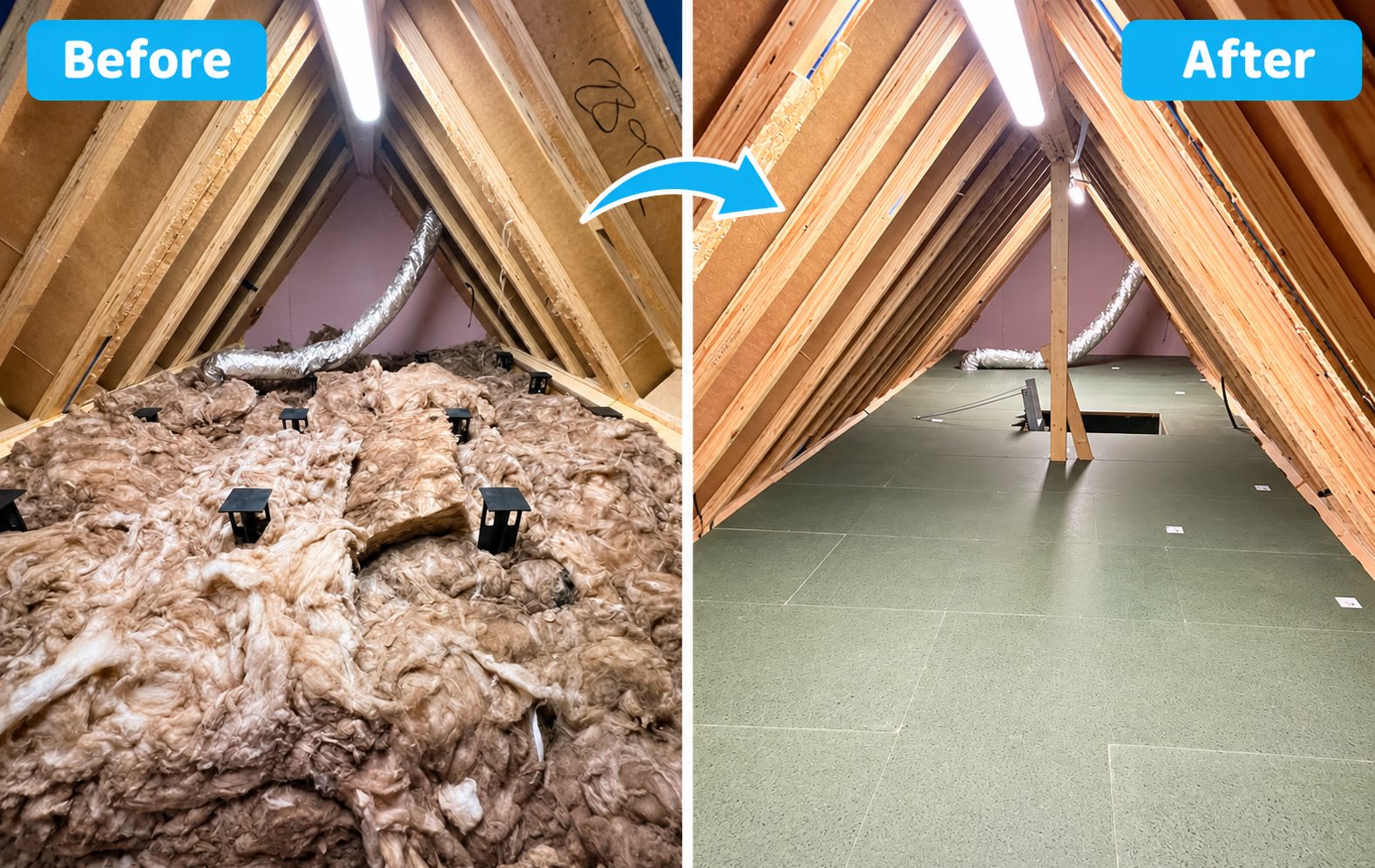
Moving into a new-build home is exciting. Everything is fresh, modern and designed for contemporary living. But there's one thing many homeowners discover surprisingly quickly.
There never seems to be enough storage space.
From suitcases to children's toys, holiday decorations to seasonal clothing, finding somewhere to keep everything can become a challenge. Meanwhile, directly above your ceiling, there may be a substantial amount of unused space.
So why not use it?
Many new-build homeowners have been told they shouldn't board their loft. Others worry that installing loft boarding could affect their NHBC warranty, damage their insulation or put too much weight on the roof structure.
The good news is that many new-build lofts can be adapted to provide useful storage space, provided the installation is appropriate for the property's construction and intended loads.
At Primeway, we specialise in creating practical loft storage solutions for new-build homes across Bedfordshire, Buckinghamshire and Hertfordshire, including raised loft boarding, loft ladders and lighting. Here's what you need to know before making the most of the space above your head.
Can You Board the Loft in a New-Build House?
Yes, many new-build lofts can be boarded for storage, but not every loft is suitable and the method of installation matters.
Modern houses are designed to meet demanding standards for energy efficiency, structural performance and ventilation. Unlike many older properties, new-build homes frequently have substantial insulation above their ceiling joists. They also commonly use prefabricated roof trusses. These features mean that simply laying chipboard directly onto the existing ceiling structure is not appropriate.
Before installing loft boarding, several factors need to be considered:
- The design and load-bearing capacity of the roof structure.
- The depth and condition of the existing insulation.
- The space available for a raised floor.
- Roof ventilation and condensation risks.
- Safe access through the loft hatch.
- The intended use and weight of stored items.
A professional survey helps establish whether suitable storage can be created and which installation method is appropriate. This is where Primeway can help.
Why Are New-Build Lofts Different?
Many modern houses have roof structures made from prefabricated timber trusses. These are designed to support specific loads and transfer them safely through the building. The horizontal members at ceiling level are not necessarily designed to support the weight of a conventional floor and unrestricted storage. That's an important distinction.
A loft storage platform is not the same as a structural floor designed for everyday occupation.
The suitability and permissible loading of a particular loft must be established before additional storage loads are introduced. At Primeway, we assess the available structure and proposed storage requirements before recommending an installation. Where the existing structure cannot be shown to support the proposed loads, further structural advice or design may be necessary.
What Is Raised Loft Boarding?
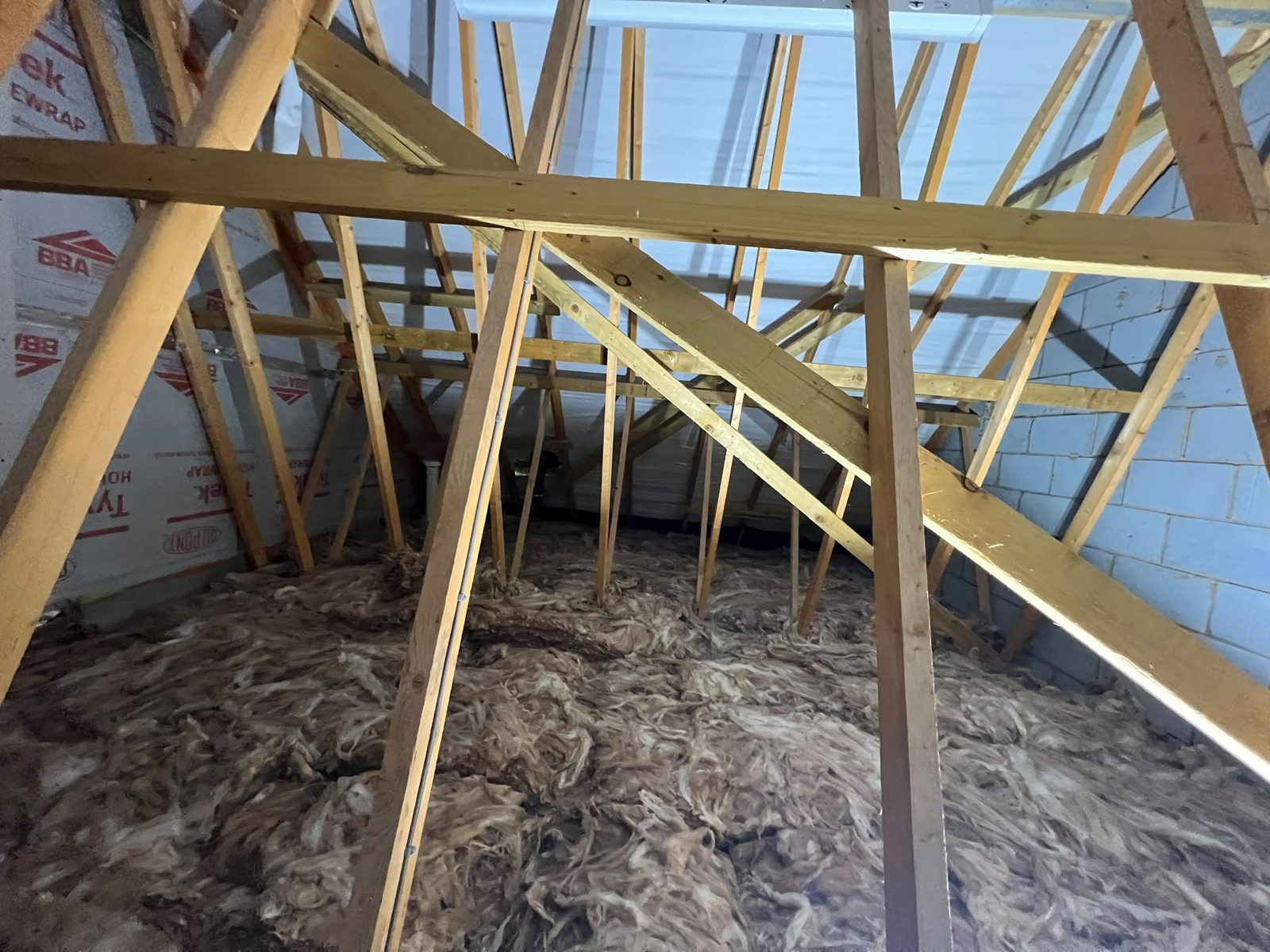
Raised loft boarding is a system designed to create a storage platform above the existing loft insulation. Instead of placing boards directly onto the ceiling joists, a supporting system raises the finished floor to an appropriate height. This allows insulation to remain beneath the new platform without being compressed.
A typical installation involves:
- Assessing the loft structure and insulation.
- Determining an appropriate raised floor height and support arrangement (usually subject to the existing insulation height).
- Installing suitable raised supports and, where specified, a supporting timber framework.
- Securing moisture-resistant tongue-and-groove loft boarding.
- Checking the completed installation and explaining its intended storage use.
The exact system depends on the property.
Why Is Raised Boarding Important?
Modern loft insulation is designed to trap air within its fibres. When insulation is compressed, some of that trapped air is lost, reducing its thermal effectiveness. According to the Energy Saving Trust's roof and loft insulation guide, homeowners who want loft storage should consider a raised floor arrangement that accommodates the insulation and maintains appropriate ventilation.
This is why raised boarding is particularly relevant to new-build homes.
You can create useful storage space without unnecessarily sacrificing the performance of the insulation beneath it.
Will Boarding My Loft Affect My NHBC Warranty?
This is one of the most common concerns among new-build homeowners. It's also an area where misleading information can cause unnecessary confusion.
Installing loft boarding does not necessarily mean that every aspect of your home's warranty disappears. However, alterations and additions can affect what is covered.
Most new-build homes come with a structural warranty, such as NHBC Buildmark, LABC Warranty or Premier Guarantee. These policies commonly exclude alterations or additions made after completion, and any damage caused by them. NHBC's published Buildmark information, for example, identifies alterations, modifications and additions carried out after its final inspection among the exclusions from cover.
This means homeowners should not assume that newly installed loft boarding, or damage associated with it, will be covered by their existing new-build warranty. For example, problems caused by overloading a ceiling structure or carrying out inappropriate alterations may fall outside the protection provided. Equally, the presence of loft boarding does not, by itself, establish that an unrelated defect elsewhere in the home is excluded. The circumstances of a claim and the applicable policy wording matter.
What Should I Do Before Having My Loft Boarded?
We can't tell you how your own policy will treat loft boarding, because that depends on its wording and the circumstances of any claim. Before going ahead, we recommend that you:
- read your warranty documents and any guidance from your housebuilder
- ask your warranty provider or developer in writing if you're unsure
- report any existing defects, such as ceiling cracks, to your builder before installation, especially if you're still within the builder's two-year period.
A professional installer should also explain the intended use and limitations of the proposed storage platform.
Primeway installations are not approved by NHBC or any other warranty provider, and we don't claim that they preserve your warranty cover.
Instead, our approach is to assess the property, recommend a suitable installation and explain the relevant considerations clearly. You can read more about what is covered on the NHBC Buildmark cover page.
Will Loft Boarding Damage My Insulation?
No, provided the installation is designed and carried out appropriately. Modern new-build lofts commonly contain substantial insulation at ceiling level. The Energy Saving Trust's guide to insulating a loft recommends a minimum depth of 270mm for conventional mineral-wool loft insulation, although the appropriate specification depends on the property's design and insulation materials.
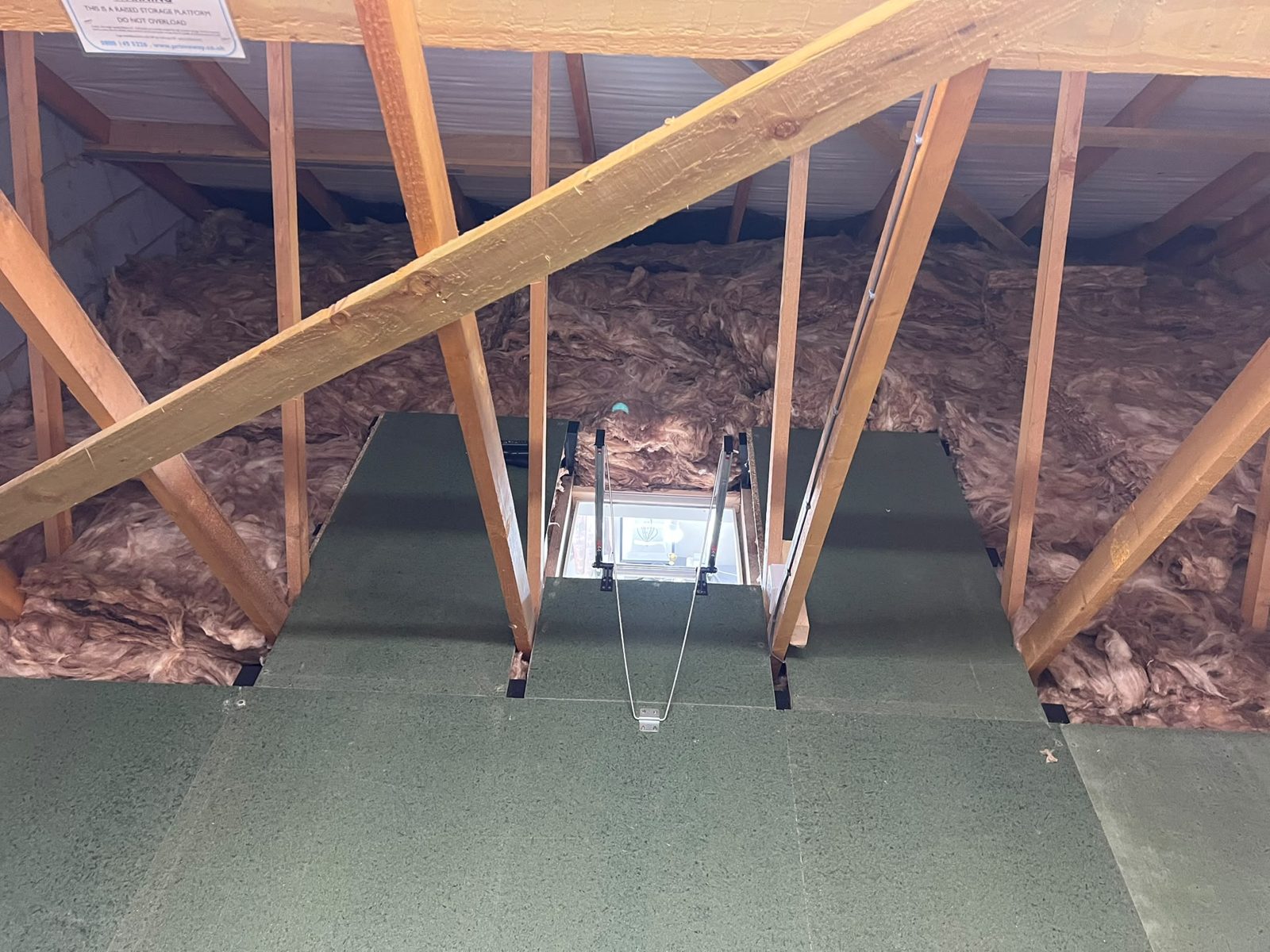
Placing boards directly onto thick insulation can compress it and reduce its effectiveness. Raised boarding, which Primeway installs, helps avoid this problem by providing sufficient clearance above the insulation. However, there are other considerations.
Ventilation Is Just as Important
Loft ventilation helps manage moisture and condensation. Blocking ventilation openings or creating unsuitable conditions beneath boarding can contribute to problems. A properly planned installation should consider the existing ventilation arrangements and avoid obstructing them.
What About Existing Insulation?
Many new-build homes already have insulation installed to their original specification, so there will most likely be no need to replace it. During a survey, Primeway can assess its condition, depth and arrangement before advising on the proposed boarding.
How Much Weight Can a New-Build Loft Hold?
There is no single safe storage weight that applies to every new-build loft. The answer depends on the property's structural design, the available supporting members, the boarding system and how loads are distributed. Importantly, the load rating of an individual loft leg or boarding product does not establish the safe storage capacity of the roof structure beneath it.
A loft intended for occasional storage is not necessarily suitable for heavy furniture, gym equipment, large collections of books or unrestricted loading. A professional assessment should establish whether the proposed storage arrangement is appropriate. Where necessary, structural calculations or specialist advice may be required.
Can I Walk on the Boarding?
A properly designed and installed storage platform may provide access for occasional retrieval of stored items, subject to its specified loading limitations. However, loft boarding should not be treated as a habitable floor or used for activities beyond its intended purpose. Primeway explains the intended use and limitations of the proposed installation during the survey and quotation process.
How Much of My Loft Should I Board?
Not every loft needs to be completely boarded. In fact, a carefully planned storage area can often provide everything a homeowner needs. Primeway will assess your needs and advise accordingly, and we would never advise you to have more than you need.
Popular options include:
- A central storage platform: A boarded area through the middle of the loft, providing practical access to stored items.
- A larger storage area: Where the structure and layout permit, additional boarding can create more usable space.
- Boarding with shelving: Suitable shelving can make better use of the available space without requiring every part of the loft to be boarded.
The best solution depends on the roof structure, available headroom and your storage requirements. For many new-build properties, creating an accessible central storage area is a practical starting point.
Can I Have a Loft Ladder Installed in My New-Build Home?
Yes. A suitable loft ladder makes accessing stored items significantly easier. Primeway offers a range of loft ladder solutions, including aluminium and timber options.
The right choice depends on several factors:
- The dimensions and location of the existing loft hatch.
- The floor-to-ceiling height.
- Available space for the ladder to extend or fold.
- Clearance within the loft.
- The construction around the hatch opening.
Some installations can use the existing hatch, while others may benefit from a replacement or modification, in either uPVC or timber. Any proposed alteration must be assessed to ensure it does not compromise structural members or other relevant requirements.
Can I Have Lighting Installed Too?
Yes. Suitable loft lighting can make storage areas much more convenient to use. Primeway can incorporate appropriate lighting into the proposed installation, subject to the existing electrical arrangements. Electrical work must be carried out safely and in accordance with applicable requirements.
How Much Does New-Build Loft Boarding Cost?
The cost depends on the size of the storage area, the installation method, the loft structure and any additional products required. Primeway offers loft storage packages starting from £599, subject to the specification and suitability of the property.
Your quotation may include:
- Raised loft boarding.
- A suitable loft ladder.
- Loft lighting.
- Additional shelving.
- Loft hatch modifications, where appropriate.
Rather than recommending the same package for every home, we assess the available space and discuss how you intend to use it. This allows us to provide a quotation based on your requirements and the property itself.
Book Your Free Loft Survey
Discover how much additional storage space your home could offer.
Primeway provides free, no-obligation loft surveys for homeowners across Bedfordshire, Buckinghamshire and Hertfordshire.
Get your free quote
Free, no-obligation loft survey. Packages from £599.
We'll only use your details to arrange your survey and quote.
Why Choose Primeway for Your New-Build Loft?
Your home is likely to be one of your biggest investments, so choosing a loft installer should involve more than comparing the price of a few sheets of chipboard. At Primeway, we focus on providing practical storage solutions tailored to individual properties.
Our approach includes:
- A proper loft survey: We assess the available space, insulation, access and relevant structural considerations before recommending a solution.
- Raised boarding solutions: Where appropriate, our raised boarding systems create useful storage space above existing insulation.
- Quality materials: We use suitable boarding and installation components selected for the proposed application.
- Complete loft storage solutions: From boarding to ladders, lighting and shelving, we can help make your loft more accessible and practical.
- Clear advice: If we identify a concern that affects the suitability of a proposed installation, we'll explain it rather than simply proceeding.
- Professional installation: Our aim is to provide a neat, practical result with minimal disruption to your home.
Frequently Asked Questions About New-Build Loft Boarding
Can I board the loft in a brand-new house?
Many new-build lofts can accommodate some form of storage boarding, but suitability depends on the structure, insulation, ventilation and proposed loads.
Does boarding a loft invalidate my NHBC warranty?
It may affect your cover. Alterations, and any damage linked to them, are commonly excluded. Check your policy and ask your warranty provider before going ahead.
Can I board over 270mm of insulation?
A suitably designed raised system can accommodate thick insulation without compressing it. The required height depends on the actual insulation specification and ventilation requirements.
Are new-build roof trusses strong enough for storage?
Some roof structures can accommodate appropriately designed storage loads, while others may require additional assessment or may not be suitable.
Can I board my entire loft?
That depends on the structure, access, headroom, ventilation and intended loading. Complete boarding is not appropriate for every property.
Can loft boarding cause condensation?
Poorly designed installations can contribute to condensation problems, particularly if ventilation is obstructed or insulation is compressed. These factors should be assessed before installation.
Do I need planning permission to board my loft?
Simple internal boarding for storage will not normally require planning permission. However, structural alterations, changes of use or other building work can introduce additional requirements. Building regulations considerations are separate from planning permission.
Can I turn my boarded loft into a bedroom?
No. Storage boarding does not turn a loft into a habitable room. A loft conversion involves different structural, fire safety, access and building regulations requirements.
How long does loft boarding installation take?
Many straightforward installations can be completed within a day, although larger or more complex projects may take longer.
Can Primeway install boarding, a ladder and lighting together?
Yes. Subject to survey and suitability, Primeway can provide a combined loft storage solution.
Ready to Make More of Your New Home?
Your loft could provide the additional storage space you've been looking for. Whether you've recently moved into a new-build property or have lived there for several years, Primeway can help you explore the options.
Get your free quote*This article is general information only and isn't legal, insurance or structural advice.