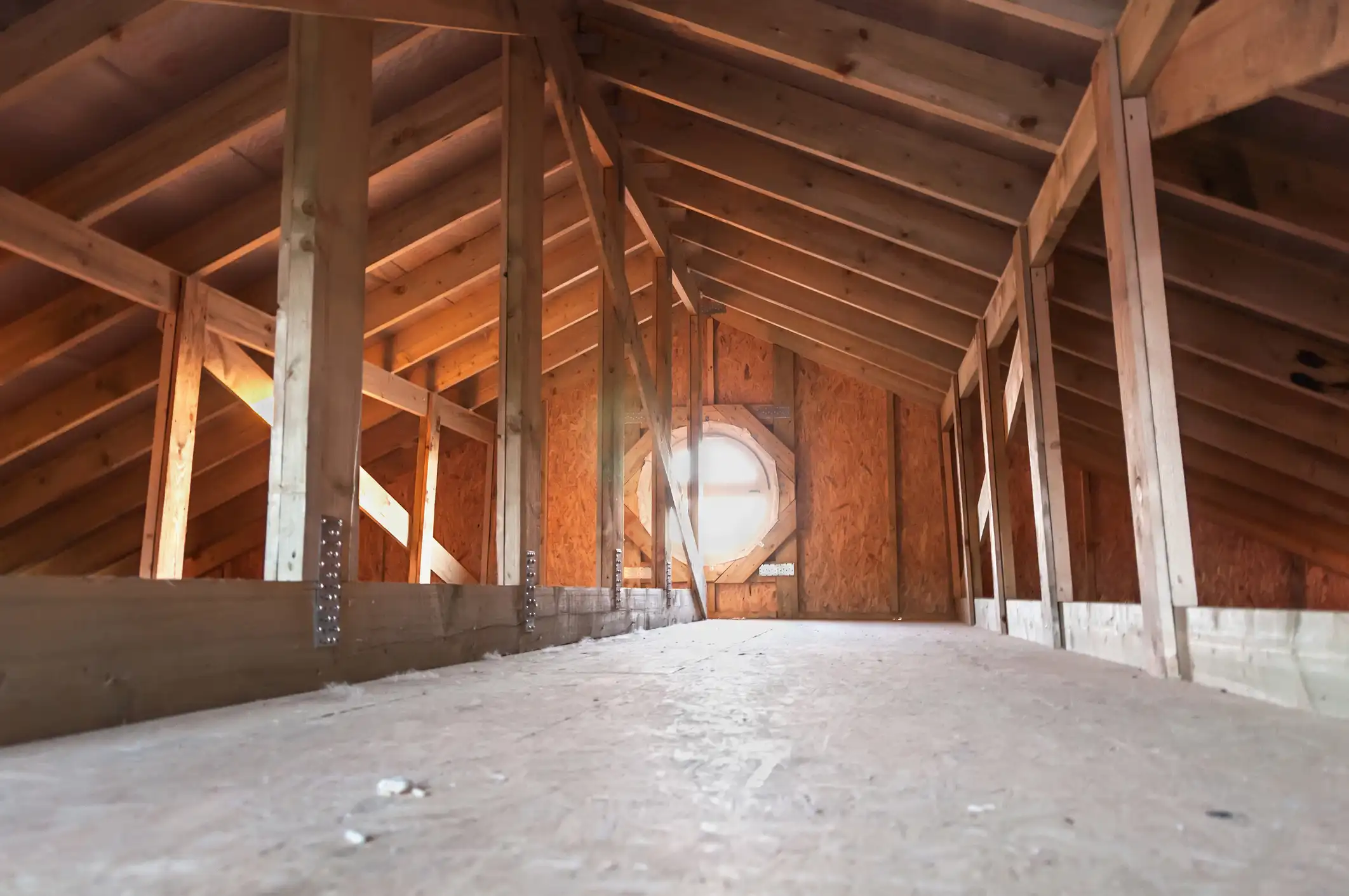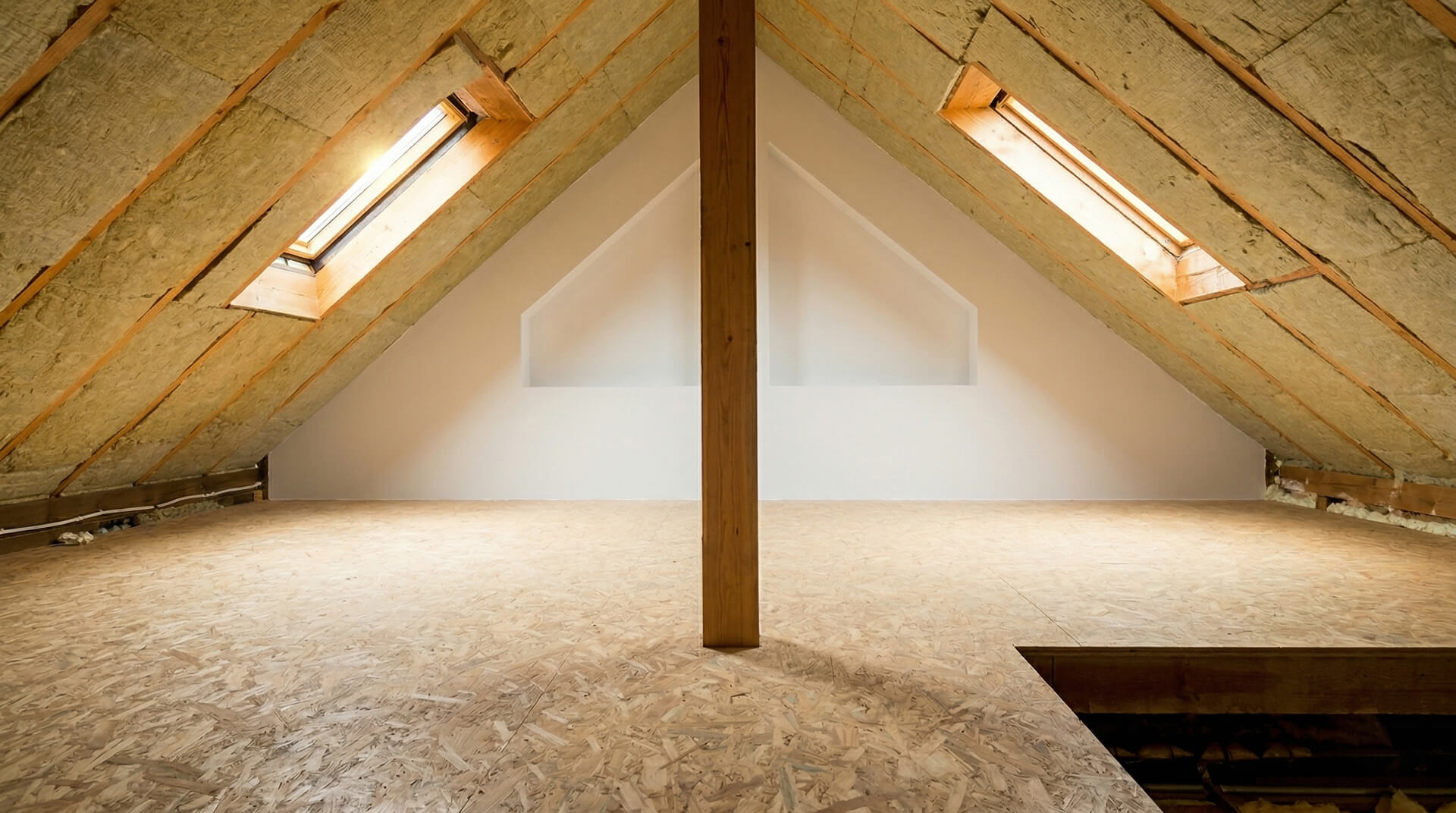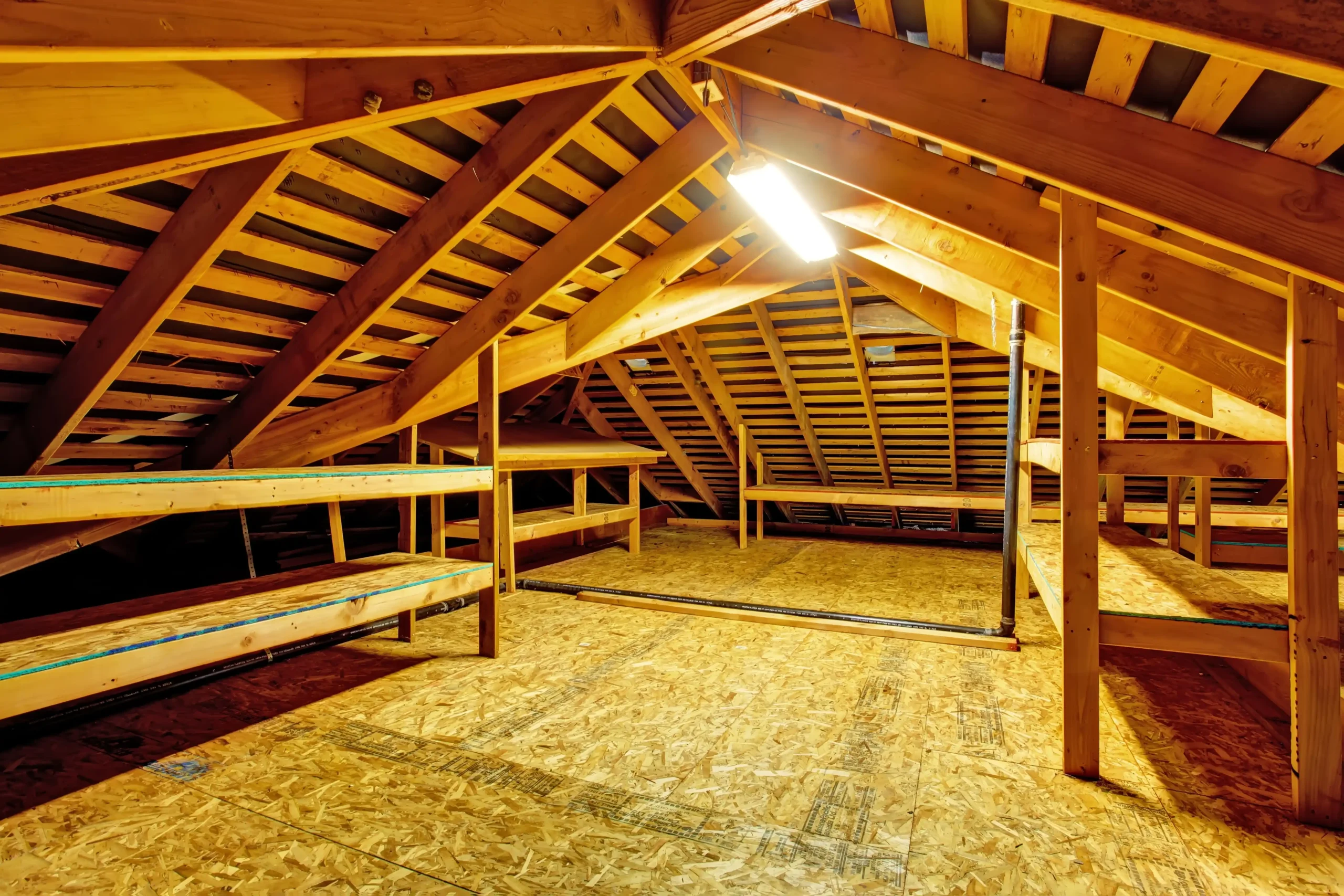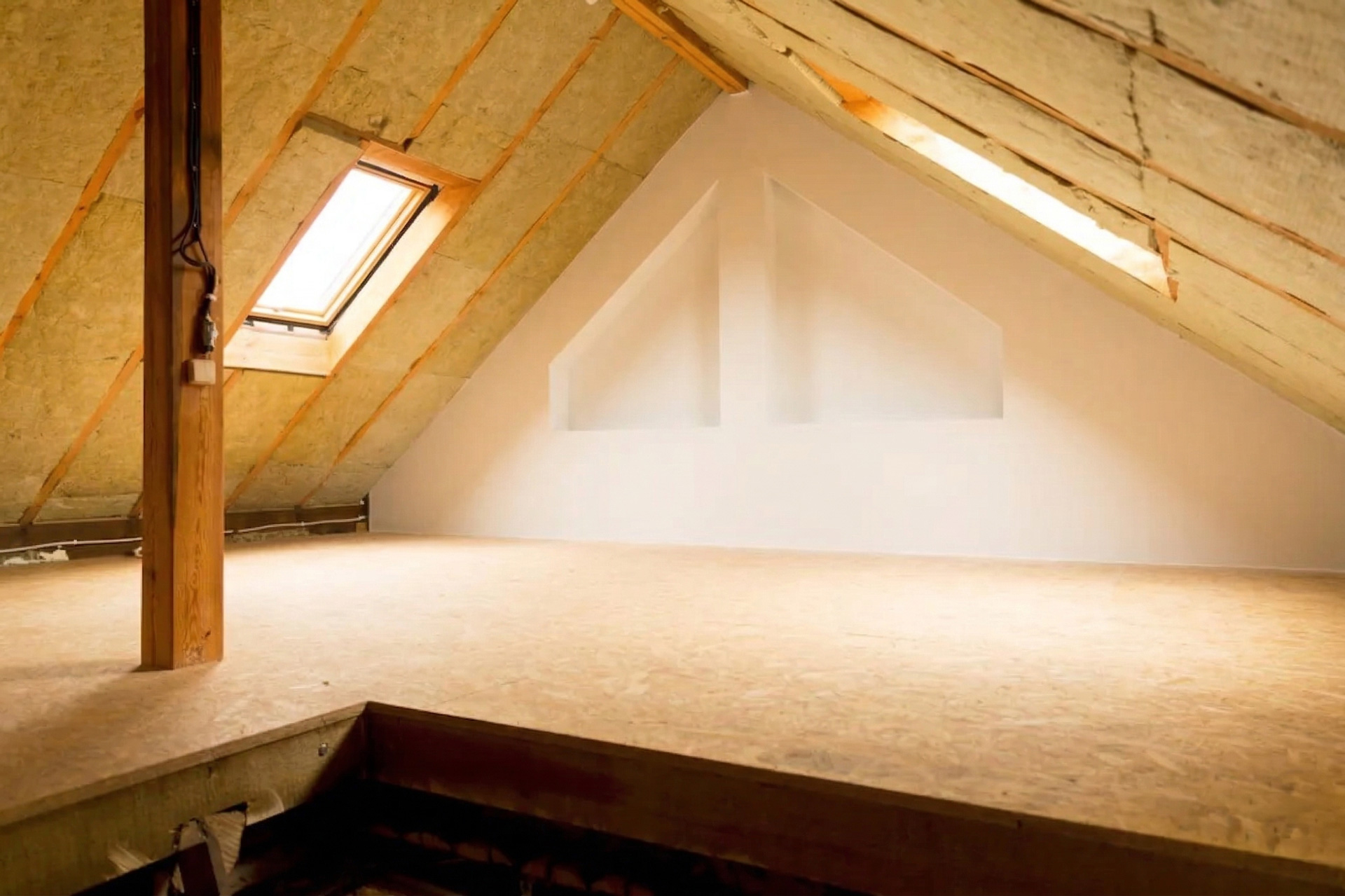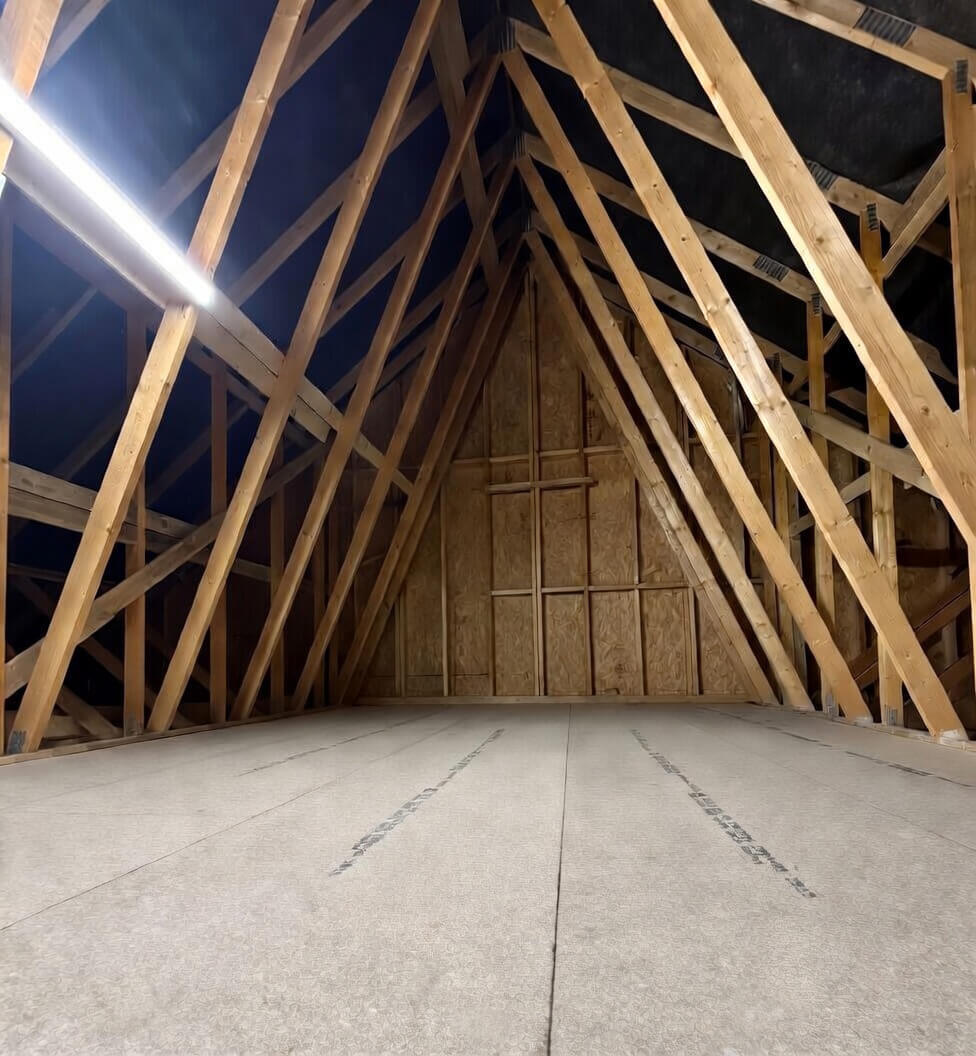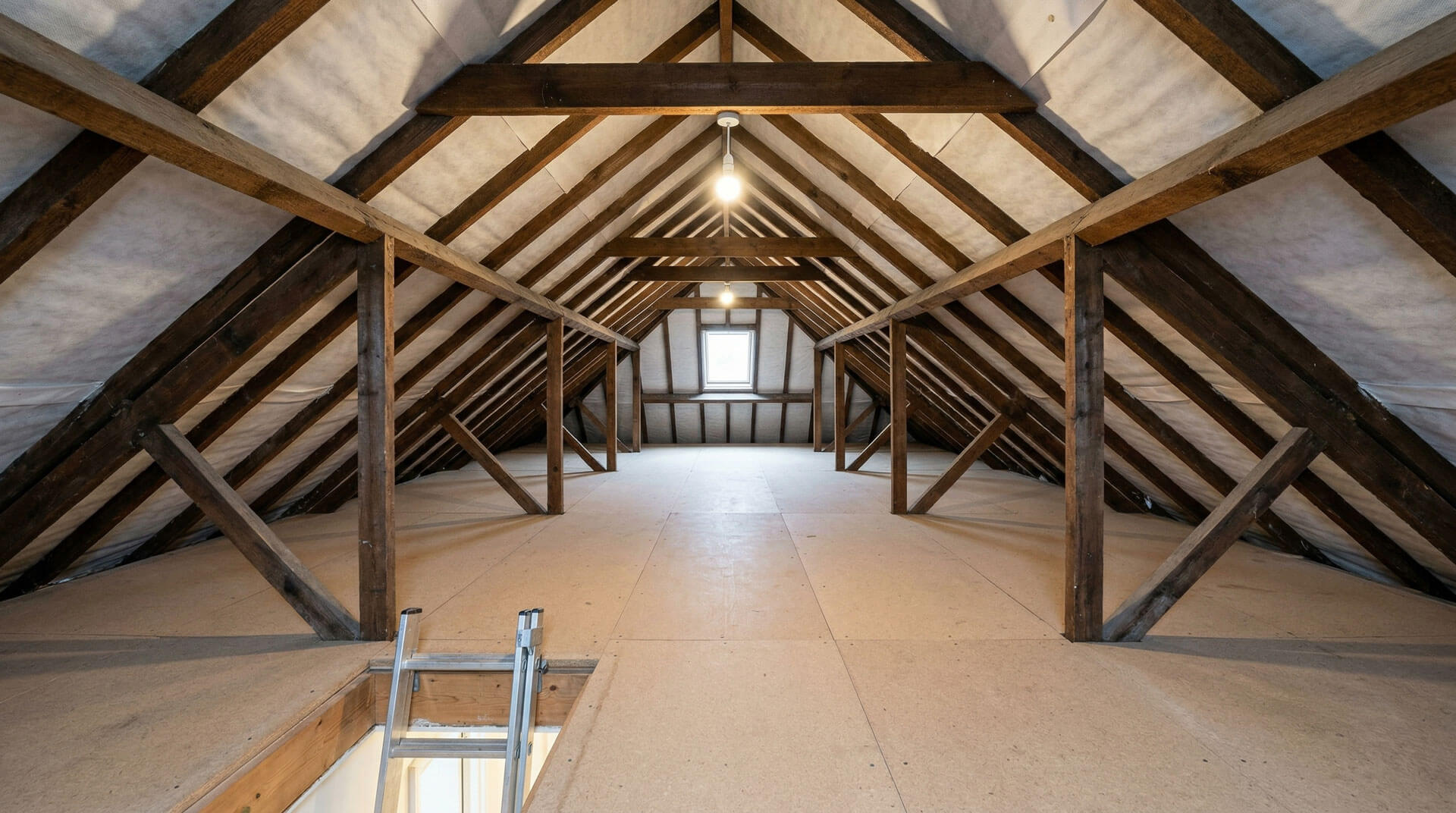
The cheapest way to board a loft floor is usually to fit basic chipboard loft panels over existing joists yourself, using standard screws and only boarding the area needed for light storage. However, if insulation sits above the joists, raised loft legs or a raised system is often the cheaper long-term choice because it avoids compressing insulation.
If you want practical loft storage without overspending, that is the key point to remember. The lowest upfront price is not always the lowest overall cost. In many UK homes, modern insulation is deeper than the loft joists. If you board straight onto the joists, you can flatten the insulation, reduce energy efficiency, and create problems later.
In this guide, you will find the cheapest loft boarding options, typical costs, where DIY can save money, and when a raised system makes more sense. If you want advice on complete storage solutions, Primeway also offers loft boarding packages and broader loft services.
What Is The Cheapest Way To Board A Loft Floor?
For light storage only, the cheapest method is normally:
- Use Standard Chipboard Loft Panels: These are usually the lowest-cost boards for loft storage.
- Fix Them Directly To Joists: This may be suitable where the existing joists can safely support the intended storage loads, insulation is not compressed, and ventilation is maintained.
- Board A Small Storage Area Only: Covering the centre section or a walkway costs far less than boarding the whole loft.
- Install Them Yourself: DIY avoids labour charges if you are confident working safely in a loft.
That said, the cheapest safe option depends on your loft layout. If insulation sits above the joists, the better-value solution is usually to raise the boards above it. This helps preserve the thermal performance recommended by GOV.UK energy efficiency guidance and supported by the Energy Saving Trust.
It is also important to separate loft boarding for storage from structural upgrades for a room conversion. A boarded loft for boxes and suitcases is not the same as a habitable loft floor.
The Lowest-Cost Loft Boarding Options Compared
There is no single best material for every loft. The cheapest loft flooring option depends on your insulation depth, how much storage you need, and whether you plan to do the work yourself.
Chipboard Loft Panels
Chipboard loft panels are usually the first choice for budget loft boarding. They are widely used for light storage and often come in manageable tongue-and-groove sections.
- Best For: Basic loft storage on a tight budget.
- Main Benefit: Low purchase cost and easy handling.
- Main Limitation: Not ideal for damp conditions or heavy-duty use.
If your joists are suitable and the insulation is not too high, chipboard is normally the cheapest way to board a loft.
OSB Boards
OSB, or oriented strand board, can be a practical alternative to chipboard. It is often a little tougher and works well where durability matters, although it may not be the absolute cheapest option.
- Best For: Homeowners who want a balance between price and strength.
- Main Benefit: Good strength for storage use.
- Main Limitation: Larger sheets can be awkward in tight loft spaces.
OSB loft flooring can work well if access is generous. Carrying large boards through a small hatch is often difficult.
Plywood Boards
Plywood is usually the more expensive option for simple loft storage. It is strong and versatile, but it is not normally the cheapest choice when low cost is the main priority.
- Best For: Situations where stronger boards are preferred.
- Main Benefit: Good strength and stability.
- Main Limitation: Higher material cost than chipboard in many cases.
For most budget loft boarding jobs, plywood is usually more than you need.
Raised Loft Boarding Systems
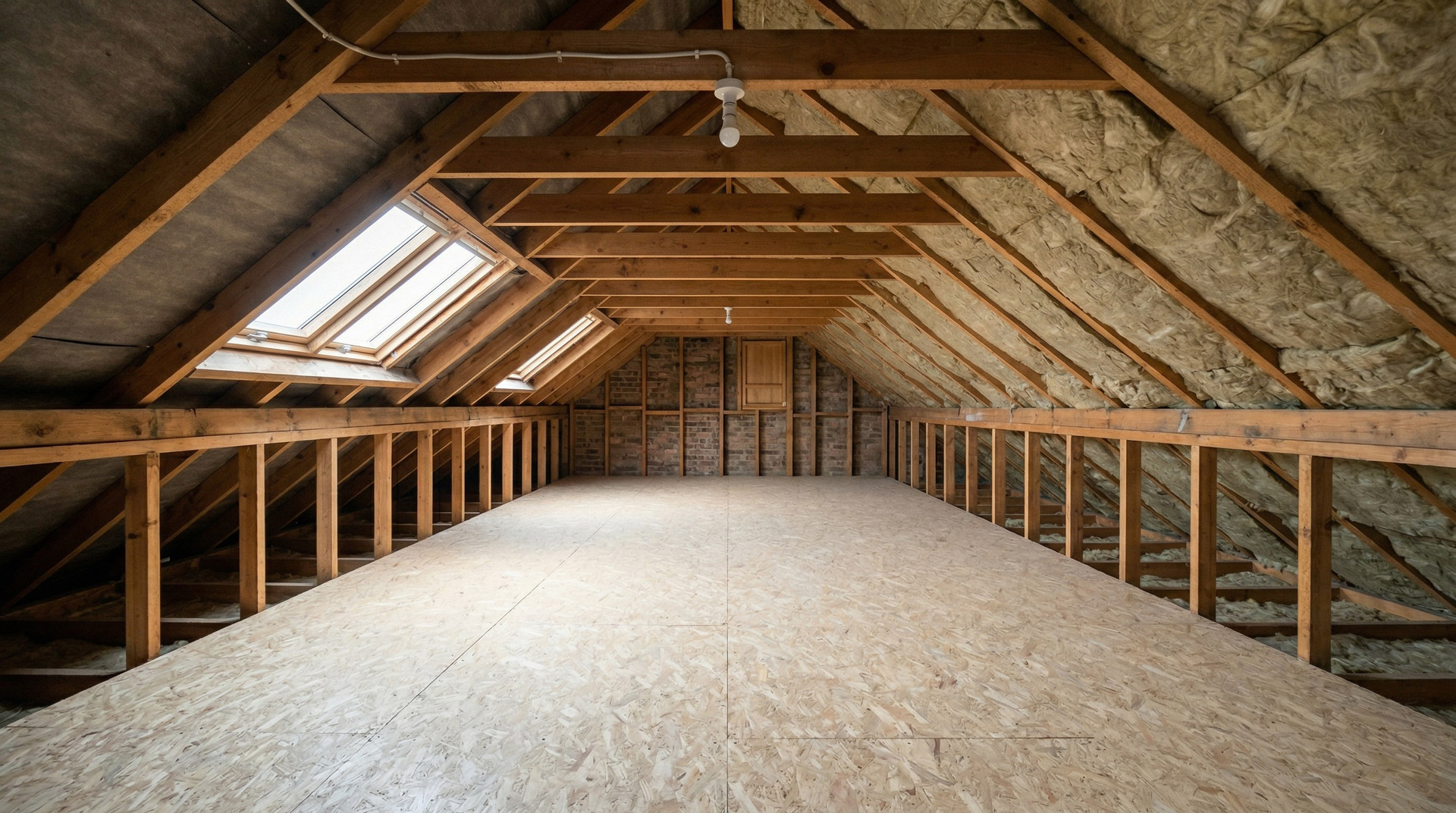
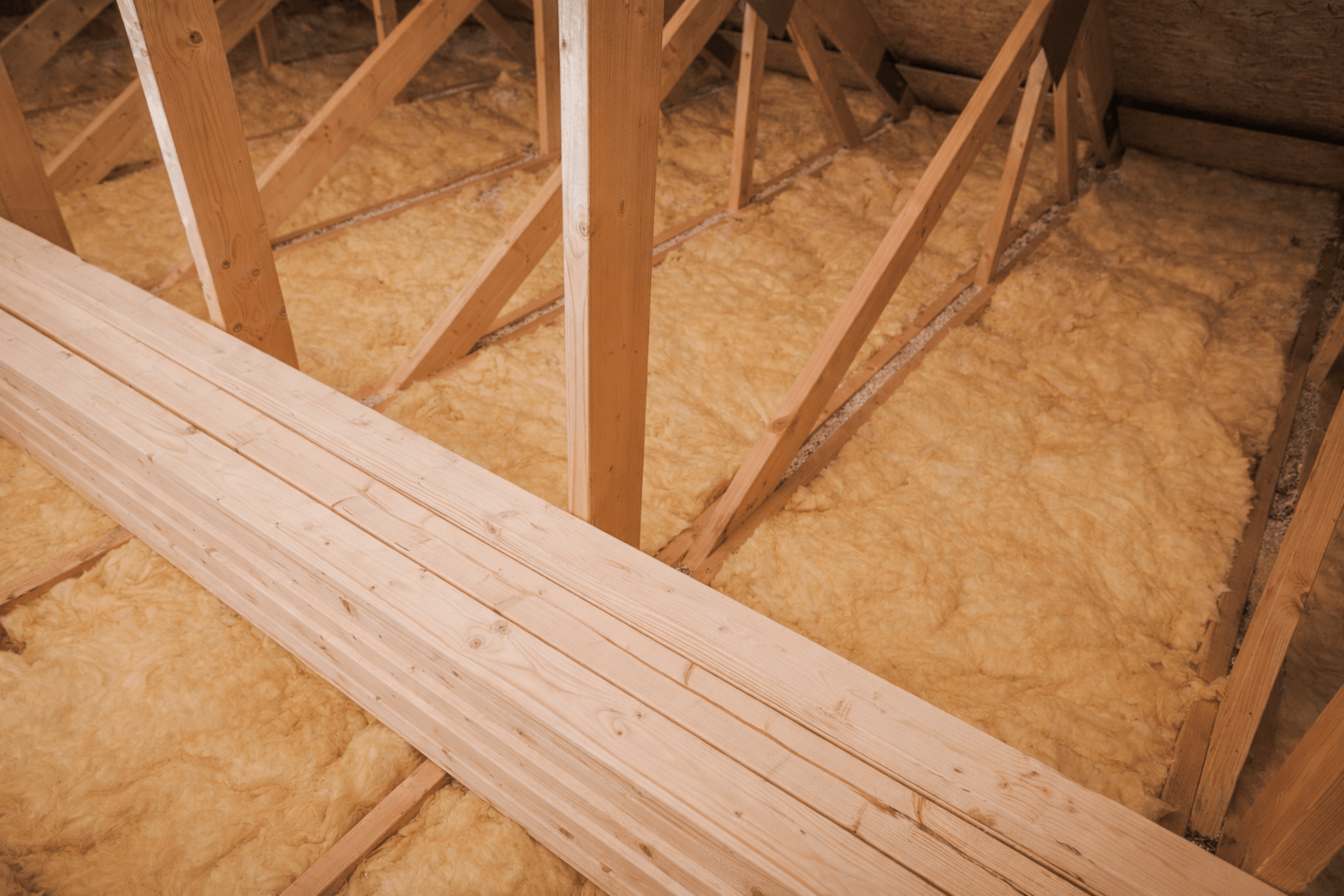
Raised loft boarding systems sit above the joists, so insulation is not squashed underneath. They cost more upfront because you need loft legs or another raised framework, but they can be the cheapest long-term route where insulation depth is an issue.
- Best For: Lofts with insulation above joist height.
- Main Benefit: Protects insulation performance and helps maintain airflow.
- Main Limitation: Higher initial materials cost.
If you are unsure whether your loft can be boarded safely over insulation, see can loft boarding be installed over insulation and can loft insulation be installed with loft boarding.
When Basic Boarding Is Cheap Upfront But Costly Later
This is where many low-cost guides miss the bigger picture. Direct-to-joist boarding may look cheapest on day one, but it can cost more over time if it harms insulation performance or creates moisture issues.
Why Insulation Height Matters
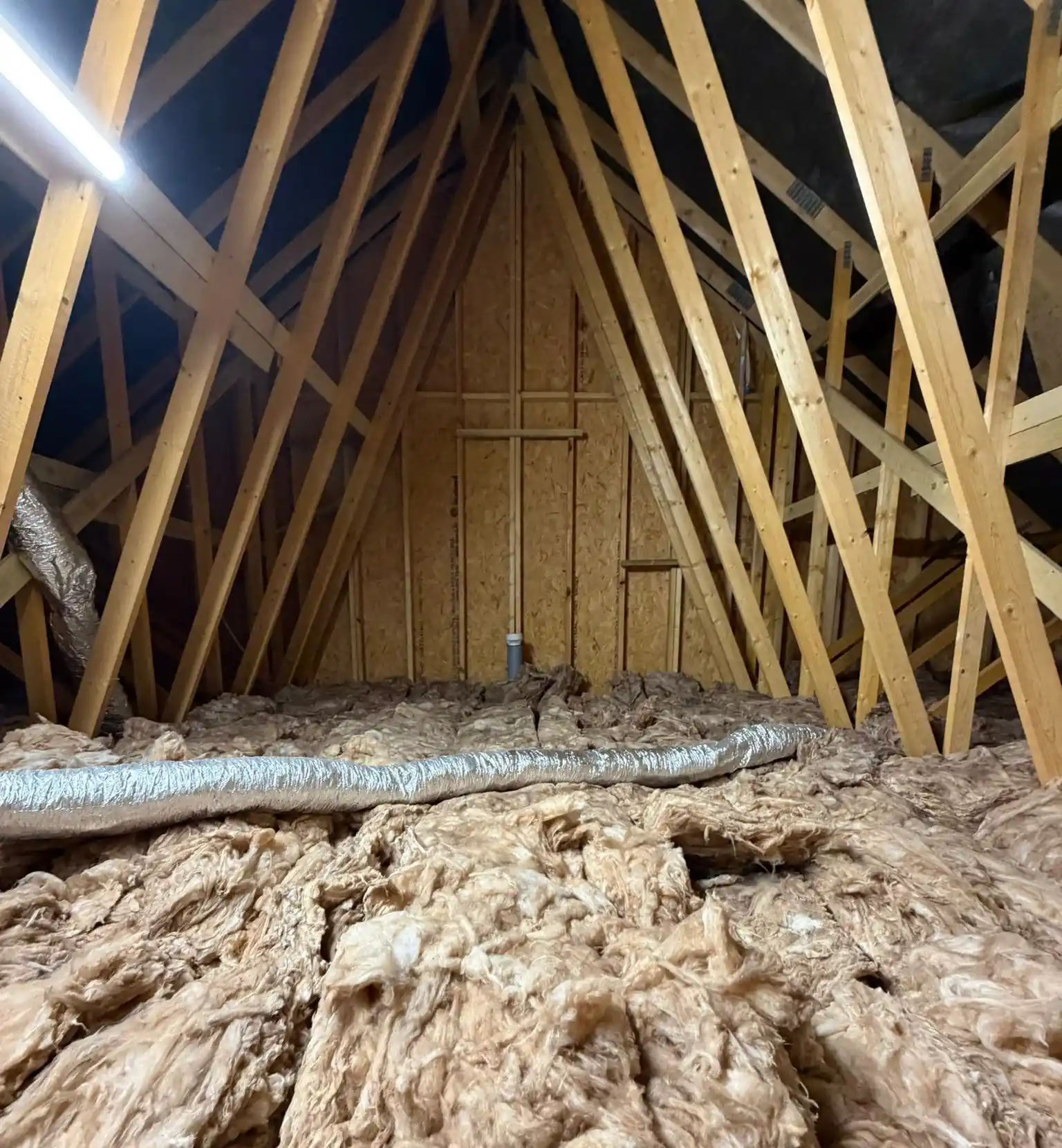
Many loft joists in older homes are shallower than modern recommended insulation depths. That means the insulation often sits above the timber. According to Approved Document L, conserving heat is an important part of dwelling performance, so reducing insulation effectiveness is not a smart money-saving move.
If boards are screwed straight onto joists over thick insulation, the insulation gets compressed. That can reduce its ability to trap heat and make the home less energy efficient.
Risks Of Compressing Loft Insulation
- Higher Heat Loss: Flattened insulation can work less effectively.
- Reduced Energy Savings: Money saved on cheap boarding may be offset by higher heating bills.
- Poorer Long-Term Value: You may end up paying to redo the loft floor properly later.
This is why the cheapest loft flooring option is not always the one with the lowest material price.
Ventilation And Condensation Concerns
Lofts need airflow. Poor boarding choices can interfere with ventilation at eaves level or create cold spots that increase condensation risk. The NHBC condensation and mould guidance explains how moisture problems can develop when ventilation and insulation do not work together properly.
If your loft already shows signs of damp, mould, or stale airflow, a bargain boarding job can quickly become a false economy.
Is DIY Loft Boarding The Cheapest Option?
DIY loft boarding cost is often lower than hiring an installer, but only if the job is straightforward and you already have the tools, time, and safe access.
Typical Materials And Tools Needed
- Loft Boards: Usually chipboard panels, OSB, or plywood.
- Screws: Suitable wood screws for secure fixing.
- Loft Legs Or Raised Supports: Needed if boarding above insulation.
- Drill Driver: For pilot holes and fixing boards down.
- Tape Measure And Pencil: For marking and planning cuts.
- Saw: For trimming boards where needed.
- Protective Equipment: Gloves, dust mask, knee pads, and lighting.
Where DIY Can Save Money
- No Labour Costs: This is usually the biggest saving.
- Board Only What You Need: A small central zone can keep spending under control.
- Use Standard Panels: Basic chipboard boards are often enough for light storage.
If access is decent and the loft is clear, DIY can be the cheapest route for a simple storage platform.
When Professional Installation Offers Better Value
Professional installation often makes better financial sense when:
- Insulation Sits Above Joists: A raised system needs more careful planning.
- Access Is Poor: Small hatches and awkward ladders slow everything down.
- You Need Extra Features: Lighting, ladder upgrades, or hatch enlargement add complexity.
- You Want Weight Guidance: Storage loads should match the loft's intended use.
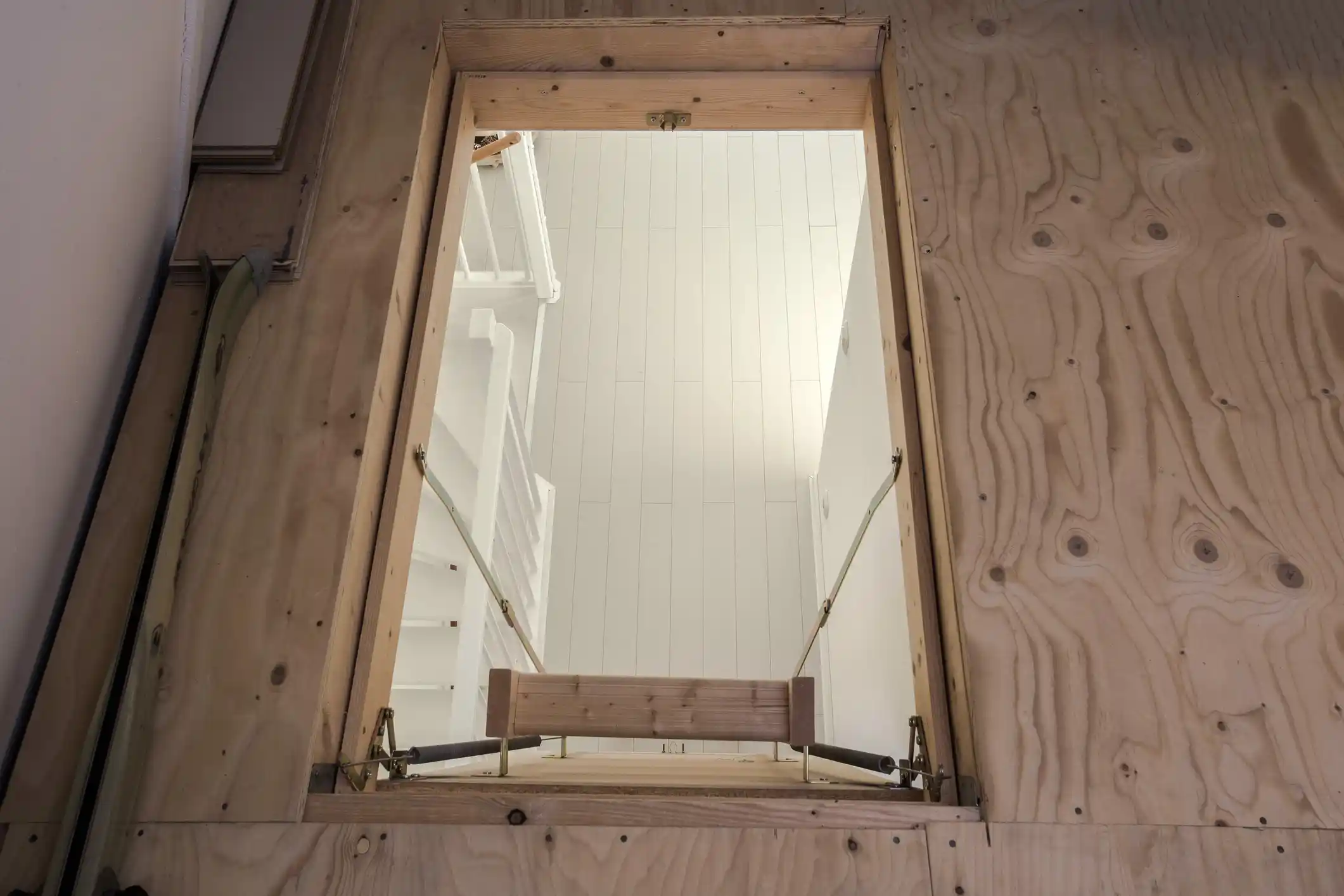
Primeway can help with related upgrades such as loft ladders, loft lighting, and loft hatches. These can make a boarded loft safer and more practical to use.
How Much Does Cheap Loft Boarding Usually Cost?
Costs vary by material, loft size, and whether the boards go directly on joists or on a raised system. In general, the cheapest jobs are small DIY storage areas using standard chipboard panels.
Cost Per Board Or Per Square Metre
Typical pricing usually follows this pattern:
- Chipboard Loft Panels: Usually the lowest-cost option per board and per square metre.
- OSB Boards: Often mid-range, depending on thickness and sheet size.
- Plywood: Usually the highest-cost standard board material.
- Raised Systems: Higher cost because support components sit underneath the boards.
For many households, the main cost-saving decision is not the board type alone. It is how much of the loft you actually cover.
Extra Costs For Loft Legs, Fixings And Access
Hidden costs can quickly change the budget:
- Loft Legs Or Battens: Needed to lift boards above insulation.
- Screws And Fixings: A small cost on their own, but still part of the total.
- Lighting: Safe storage is much easier with proper visibility.
- Ladder Or Hatch Improvements: Better access can be essential, not optional.
- Insulation Tidy-Up: Existing insulation may need levelling or topping up first.
If you are planning storage, it is worth reviewing insulation and access upgrades at the same time rather than treating them as separate jobs.
Saving Money By Boarding Only A Storage Zone
One of the best ways to cut loft floor boarding cost is to avoid boarding the entire loft. Many households only need:
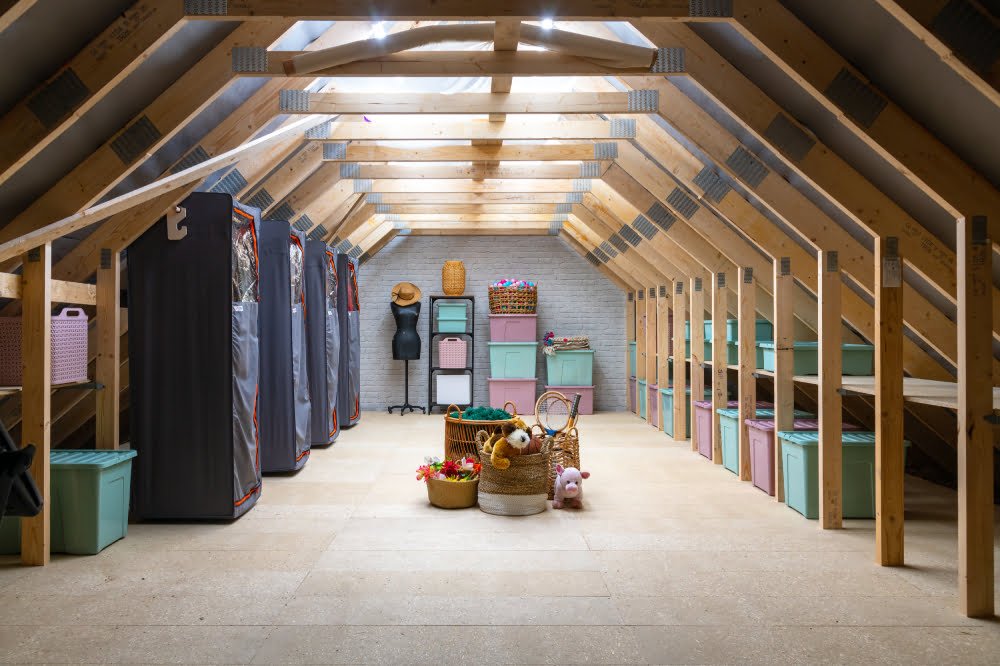
- A Central Storage Platform: Ideal for boxes and seasonal items.
- A Walkway To Key Areas: Useful for reaching tanks or services safely.
- A Limited Light-Storage Section: Enough for practical use without unnecessary spending.
This is often the sweet spot between budget and usability.
Speak to a loft specialist
Rather just talk it through?
Speak to the Primeway team about your loft and get honest, no-pressure advice on the right approach for your home.
Call 0800 145 5226What Is The Cheapest Safe Way To Board A Loft Over Insulation?
The cheapest safe way to board a loft over insulation is usually to install raised supports, such as loft legs, and then fit chipboard boards on top. To keep costs down, only cover the area you need for storage.
That gives you a low-cost board choice while still protecting insulation depth. In simple terms:
- Cheapest Upfront Method: Chipboard fixed straight to joists.
- Cheapest Safe Method Over Deep Insulation: Chipboard on a raised support system.
- Cheapest Long-Term Method In Many Modern Lofts: Raised boarding, because it avoids reducing insulation performance.
If you are comparing safety, storage, and structural limits, it also helps to review how much weight loft boarding can hold and whether loft boarding requires planning permission.
Common Mistakes To Avoid When Trying To Save Money
Budget loft boarding works best when you do not cut corners in the wrong places.
Fixing Boards Straight Onto Insulated Joists
This is one of the most common mistakes. If the insulation is compressed, the loft may become less energy efficient and the original saving becomes much less attractive.
Using The Loft For Heavier Storage Than Intended
A boarded loft for light storage is not designed in the same way as a strengthened floor for furniture, gym equipment, or regular living use. Overloading boards or joists can cause damage.
For safety, always treat standard loft boarding as storage flooring unless a qualified professional confirms otherwise.
Ignoring Loft Access, Lighting And Hatch Size
A cheap floor is much less useful if getting into the loft is awkward or unsafe. A narrow hatch, poor lighting, or unstable access can reduce usability and add costs later when you need improvements anyway.
Cheapest Option Vs Best-Value Option: Which Should You Choose?
If your loft has shallow insulation and you only want a small light-storage area, basic chipboard fixed over joists may be the cheapest sensible choice.
If your insulation sits above the joists, the best-value option is usually a raised boarding system with budget-friendly boards on top. It costs more on installation day, but it often protects energy efficiency, reduces the chance of rework, and gives you a safer, more future-proof result.
A simple rule is this:
- Choose Direct-To-Joist Boarding: Only when insulation depth and ventilation make it suitable.
- Choose Raised Boarding: When insulation would otherwise be compressed.
- Choose Partial Coverage: When you want the biggest saving without losing practical storage.
Frequently Asked Questions About Cheap Loft Flooring
Can Loft Boards Go Directly On Joists?
Yes, but only if doing so will not compress insulation or affect ventilation. In many homes, insulation is higher than the joists, so direct fixing is not the best option.
What Is The Cheapest Board For Loft Storage?
Chipboard loft panels are usually the cheapest boards for light loft storage.
Is OSB Cheaper Than Chipboard For Loft Flooring?
Not usually. OSB can offer good value, but chipboard is often the lower-cost choice for standard loft boarding panels.
Do I Need Planning Permission To Board My Loft?
Loft boarding for storage does not usually need planning permission, but it is not the same as a loft conversion. The details matter if the space is being upgraded beyond storage use.
Should I Board My Whole Loft To Save Money Later?
Not necessarily. Boarding only the area you will actually use is often the cheaper and smarter option.
Is Raised Loft Boarding Worth The Extra Cost?
Yes, in many homes it is. If it prevents insulation compression, it can be the cheapest long-term choice rather than the cheapest upfront one.
Fun Fact: Raised Boarding Can Protect Your Savings
A raised loft boarding system can cost more at the start, but modern insulation is often deeper than the joists. That means a raised system may protect your heating bill savings better than the absolute cheapest direct-to-joist method.
The cheapest way to board a loft floor is usually simple chipboard panels fitted only where needed for light storage. However, if insulation sits above the joists, the cheapest safe and sensible option is often a raised system instead.
If you want help choosing the right solution for your loft, Primeway can advise on boarding, insulation, access, and storage-friendly upgrades, so you avoid paying twice for the wrong budget option.
Thinking about your loft?
Book a free loft survey and we will talk you through the options that suit your home and budget.