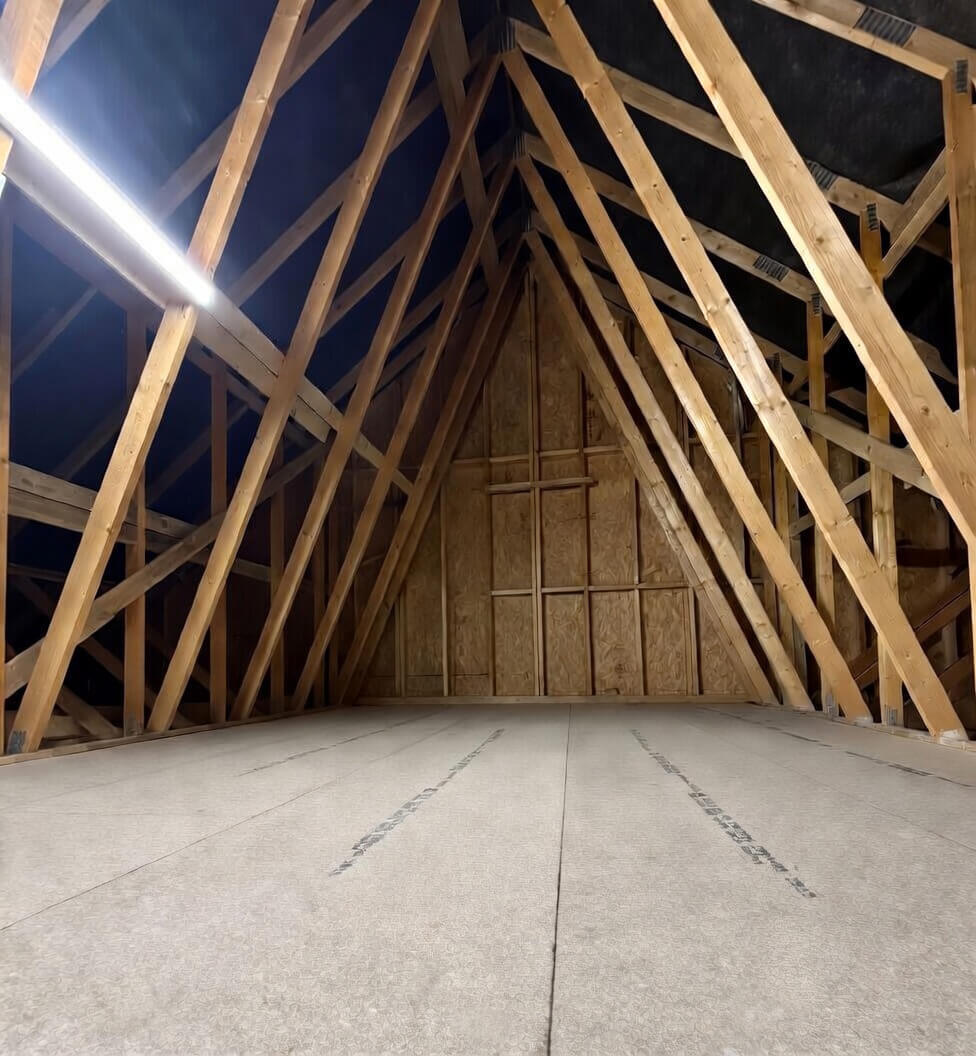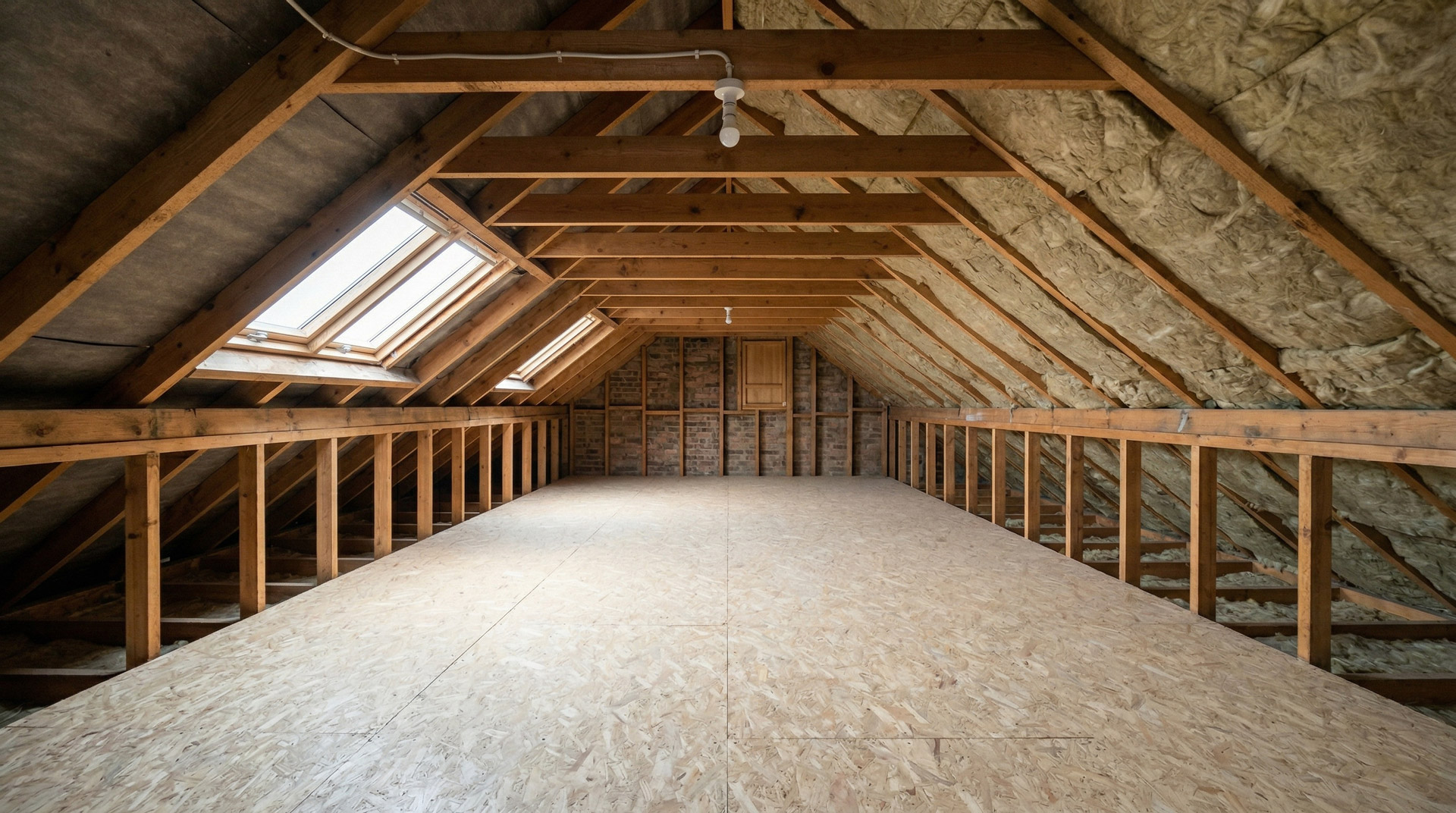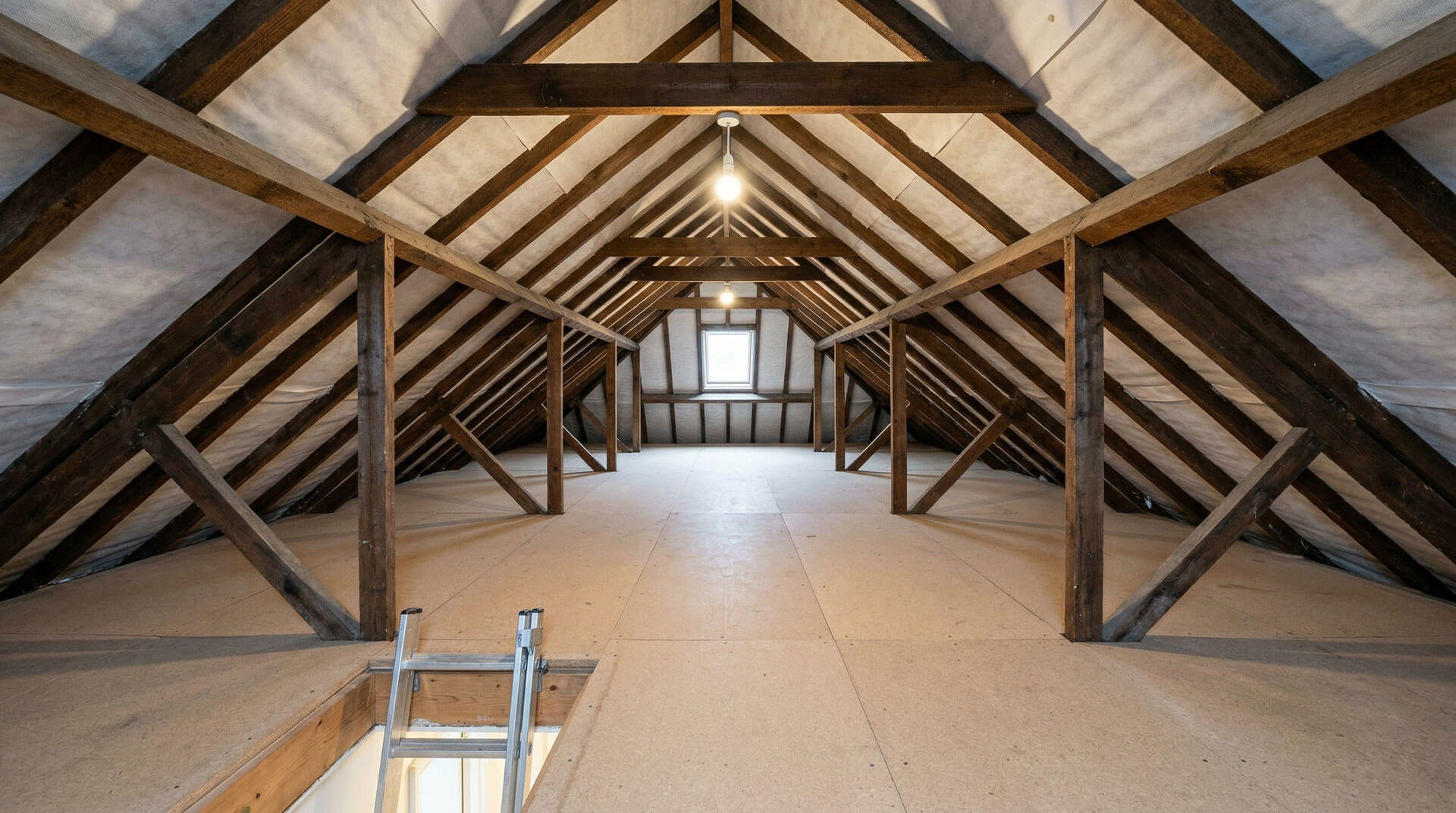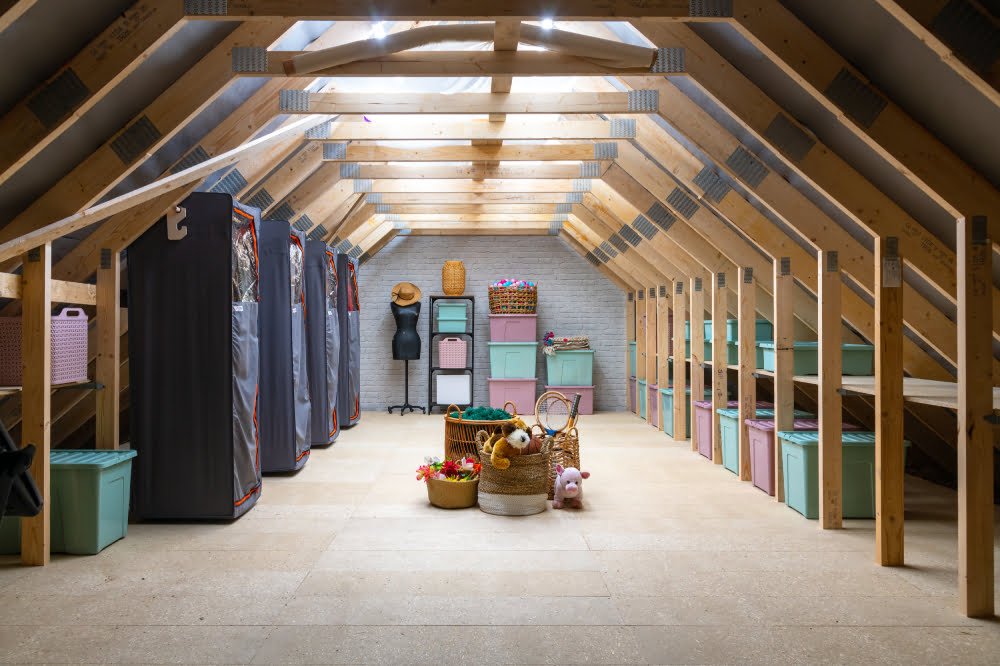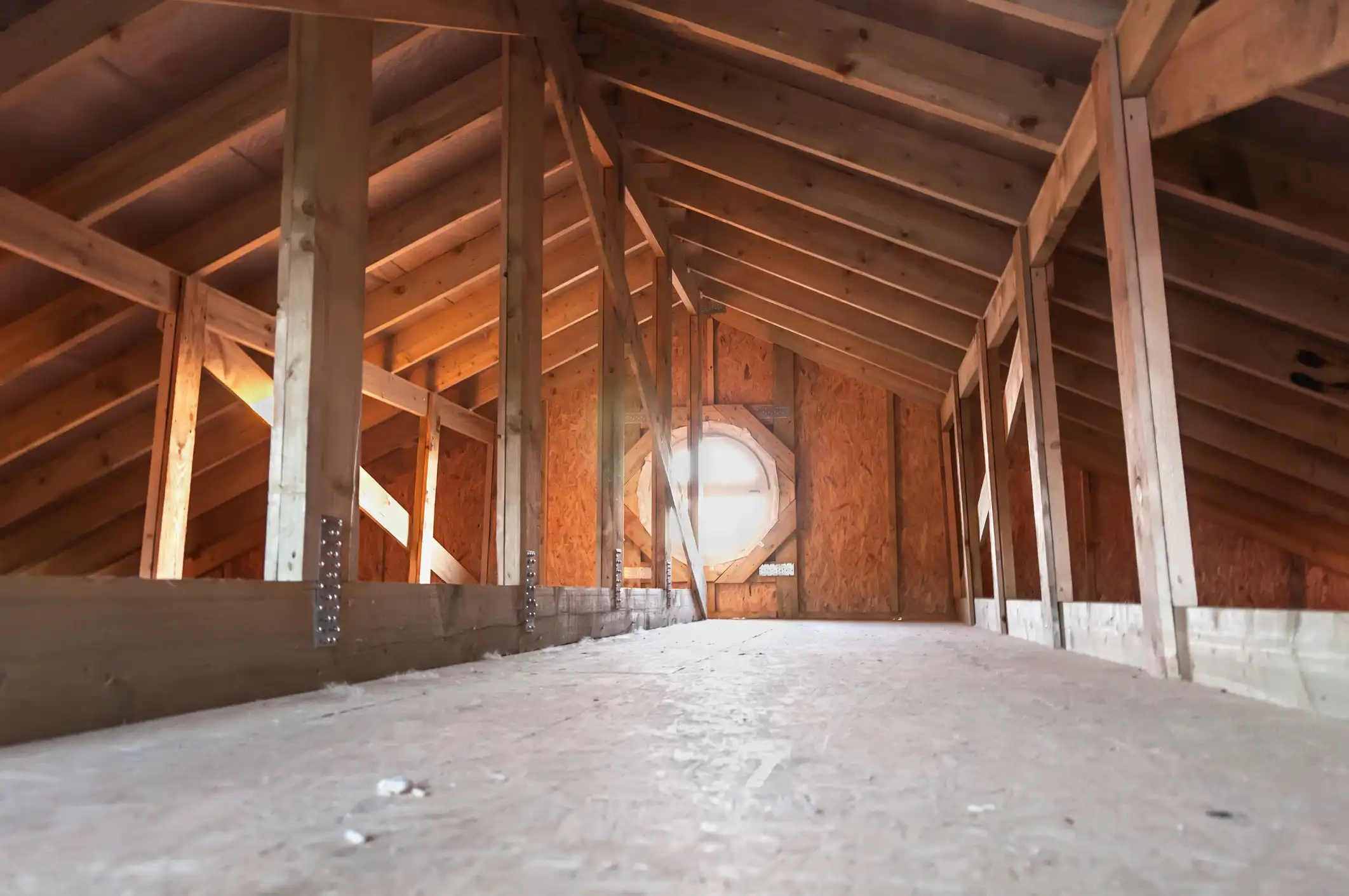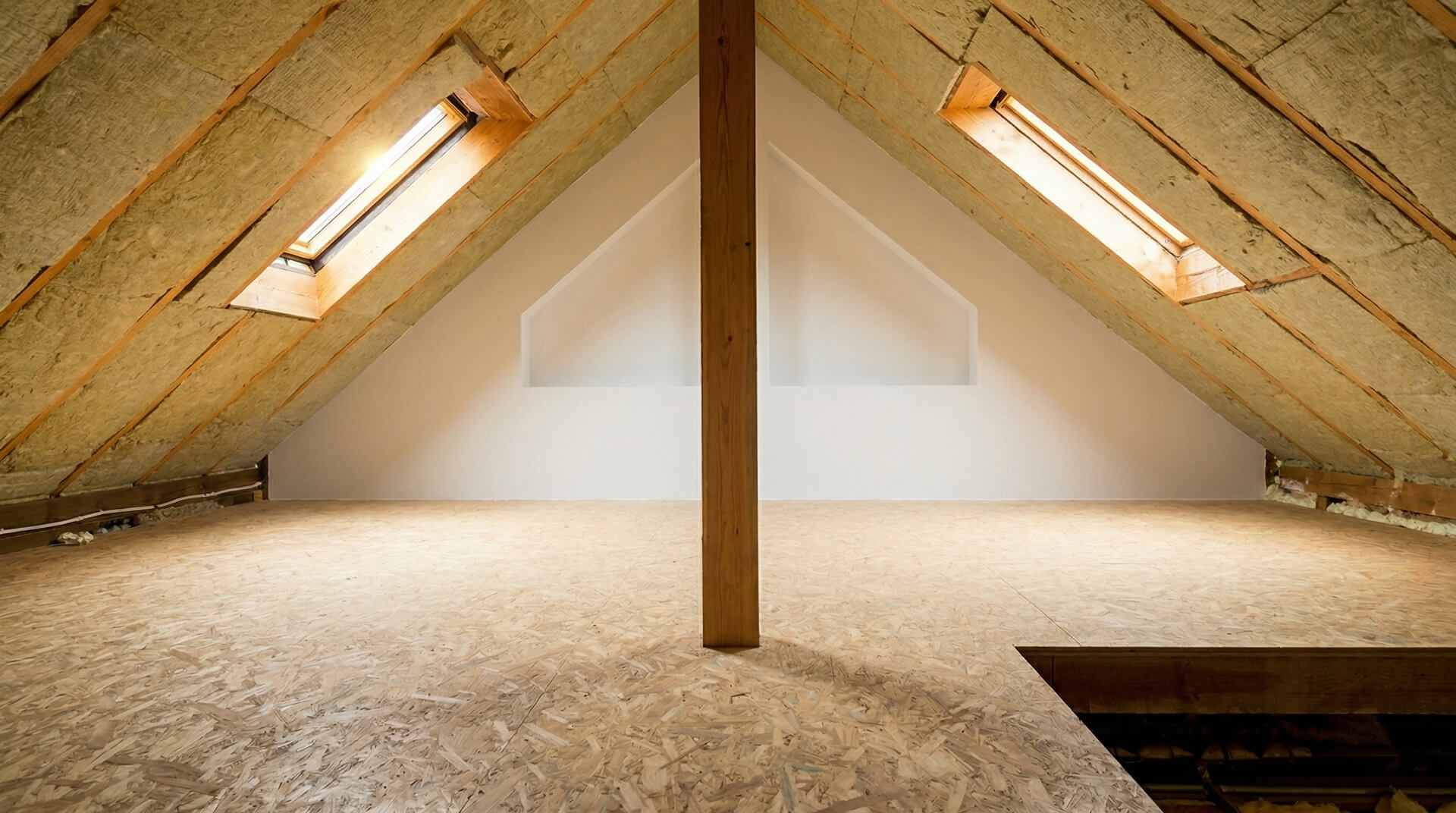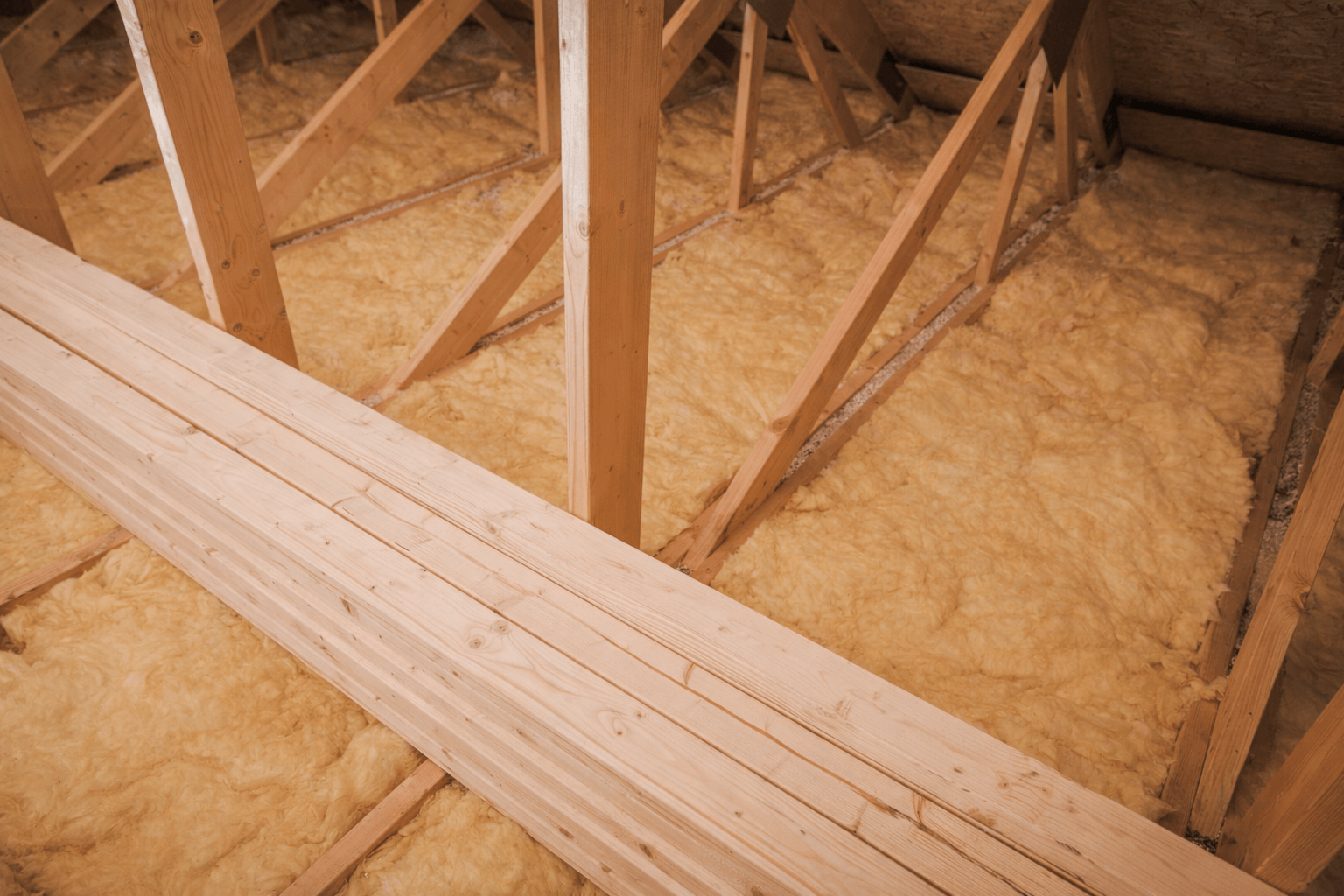
Loft boarding does not automatically cause damp, but it can contribute to condensation and moisture problems if it compresses insulation, blocks airflow, or covers an already damp loft. Proper installation, with raised boarding, good ventilation, and suitable insulation, helps prevent damp and keeps the loft useful for storage.
If you are planning to board your loft, the key is not simply adding boards. You also need to make sure the loft can still breathe, the insulation still works properly, and any existing moisture issues are fixed first.
In simple terms, a correctly boarded loft should stay dry. A poorly boarded loft can trap moisture and raise the risk of mould, musty smells, wet insulation, and even timber decay over time.
Does Loft Boarding Cause Damp?
No, loft boarding does not usually cause damp on its own. Damp problems tend to happen when the boarding reduces ventilation, squashes insulation, or hides an existing issue such as condensation or a small roof leak.
That is why the answer is more nuanced than a simple yes or no. Loft boarding can be perfectly safe when it is planned around insulation depth, ventilation routes, and how the space will be used. Raised loft boarding systems are often the best option because they create space above the insulation instead of compressing it.
- Loft boarding alone is not the problem: Moisture issues usually come from poor airflow, trapped humid air, or existing defects.
- Incorrect installation can increase risk: Boarding laid directly onto joists can flatten insulation and create colder surfaces above the ceiling.
- Proper preparation matters: Checking for mould, leaks, blocked eaves, and extractor fan problems before installation can help prevent future damp.
For homeowners who want safe storage space, loft boarding packages from Primeway can help create a practical loft without compromising insulation or airflow.
Why Damp Can Appear After Loft Boarding
When damp appears after a loft has been boarded, the boards are often blamed. In reality, the boarding may only be one part of a wider moisture problem. In most cases, the main issue is condensation, not penetrating damp.
Condensation happens when warm, moist air meets a cold surface and turns into water droplets. In a loft, this can happen on roof felt, rafters, nails, stored items, or the top of compressed insulation.
Compressed Insulation And Colder Loft Surfaces
One of the biggest mistakes is laying boards directly over insulation between the joists. Modern loft insulation is often thicker than the joists, so standard boarding can squash it down.
Compressed insulation works less well because it traps less air. General insulation guidance from the U.S. Department of Energy explains that insulation resists heat flow, and compression can reduce its thermal performance.
When insulation performs poorly, more heat escapes from the rooms below. At the same time, surfaces in the loft can become colder in the wrong places. That difference in temperature makes condensation more likely.
- Flattened mineral wool loses effectiveness: Less trapped air means poorer thermal resistance.
- Colder surfaces encourage condensation: Moist indoor air is more likely to leave water on cold loft materials.
- Energy efficiency can suffer: Poor insulation performance can also raise heating costs.
Blocked Eaves Ventilation And Reduced Airflow
Your loft needs airflow, especially at the eaves, where outside air enters and helps carry away moisture. If insulation, stored items, or boarding details block these routes, humid air can linger in the roof space.
That trapped moisture then has nowhere to go. Over time, it can settle on cold surfaces and cause damp patches, mould growth, or a general musty smell.
Good roof space airflow is an important part of best practice. Organisations such as the National Insulation Association highlight the need to consider both insulation and ventilation in retrofit work.
Existing Condensation Problems Made Worse
Sometimes loft boarding is fitted in a loft that already has a hidden moisture problem. The boarding did not create the issue, but it can make the signs harder to spot until the problem gets worse.
For example, a loft may already have:
- Minor mould on the underside of the roof felt: This can spread if airflow remains poor.
- Wet insulation near the eaves: This may point to condensation or a small leak.
- Humidity entering from below: Gaps around pipes, cables, and loft hatches can let warm, moist air rise.
Loft Boarding And Condensation: What Is The Link?
The link between loft boarding and damp is usually condensation. Boarding changes how the loft is used and how air moves around it. If the balance between warmth, insulation, and ventilation is upset, moisture can build up.
This matters because loft damp is often not caused by rain coming through the roof. More often, it comes from everyday moisture created inside the home.
Warm Moist Air Rising From The Home
Showering, cooking, drying clothes indoors, and even breathing all add moisture to the air. According to the Met Office, humidity is the amount of water vapour in the air, and warmer air can hold more moisture.
That warm, moist air naturally rises. If there are gaps around the loft hatch, pipe penetrations, downlights, or the tops of partition walls, moisture can escape into the loft.
Once there, it meets much colder surfaces. That is when condensation forms.
Cold Roof Timbers, Felt, And Stored Items
Lofts are usually colder than the living spaces below, especially in winter. If airflow is poor, moisture can settle on rafters, roof felt, nails, boxes, and timber joists.
A boarded loft used for storage can make this worse if items are packed tightly and air cannot move around them. Even cardboard boxes can absorb moisture and develop a stale smell over time.
The important distinction is this:
- Condensation damp: Usually appears as droplets, mould, mildew, or general dampness on cold surfaces.
- Roof leaks: Usually appear as localised water ingress, staining, or obvious wet patches after rain.
- Penetrating damp: Usually comes from an external defect that lets water through the building fabric.
Signs Your Boarded Loft May Have A Moisture Problem
Spotting the signs early can stop a small issue becoming a larger repair job. Check the loft regularly, especially during colder months.
Musty Smells, Mould, And Damp Patches
A stale or musty smell is often one of the first warning signs. You may also notice black mould, white fungal growth, or dark damp patches on timber, plasterboard, or stored items.
Persistent damp and mould are not just bad for the building. The NHS notes that damp and mould can affect health, especially for people with allergies or respiratory conditions.
Wet Insulation, Water Droplets, And Staining
If insulation feels damp, matted, or unusually heavy, treat that as a warning sign. You might also see water droplets on felt, nails, or the underside of the roof covering on cold mornings.
Look out for:
- Dark staining on roof timbers: This can point to repeated moisture exposure.
- Damp cardboard boxes: Stored items often reveal a condensation problem before the structure does.
- Wet patches around the loft hatch: This may show warm air leaking from below.
Timber Discolouration Or Decay
Timber affected by long-term moisture may darken, warp, or begin to soften. Surface discolouration does not always mean structural decay, but you should not ignore it.
If the timber feels spongy, flaky, or smells strongly musty, get it checked. Moisture left untreated can eventually affect the durability of the roof structure.
How To Board A Loft Without Causing Damp
The safest approach is to treat loft boarding as part of the loft's overall performance, not just as a storage upgrade. Before any boards go down, check the condition of the roof space carefully.
Here is a simple pre-boarding checklist:
- Inspect for existing leaks: Check felt, flashing lines, valleys, and chimney areas for signs of water ingress.
- Check for mould or condensation: Look at rafters, nails, and the underside of the roof covering.
- Measure insulation depth: Make sure the planned boarding method will not compress it.
- Confirm eaves ventilation is clear: Ensure insulation or stored items are not blocking airflow paths.
- Assess loft hatch sealing: Check whether warm, moist air is escaping from below.
- Review extractor fans: Make sure bathroom and kitchen fans vent properly to the outside.
Use Raised Loft Boarding Above Insulation
Raised loft boarding creates a platform above the insulation, so the insulation can remain at the correct depth. This helps preserve thermal performance while still giving you useful storage space.
This is usually the best method for modern lofts, where insulation depth exceeds joist height. If you are comparing options, Primeway offers loft services that can help match the right boarding approach to your property.
Maintain Ventilation Paths At The Eaves
Do not block the air path at the edge of the roof. The loft needs a route for air to enter and move through the space. Eaves vents and clear gaps above insulation are essential.
If insulation sits close to the eaves, ventilation trays or baffles may help keep the air channel open.
Check Insulation Depth And Condition First
Insulation should be dry, evenly laid, and suitable for the loft layout. If it is patchy, compressed, dirty, or damp, deal with that before boarding.
You may also want to review whether the loft would benefit from upgraded insulation before adding storage boards.
Seal Gaps And Reduce Moisture From Below
Stopping humid air from escaping into the loft is just as important as ventilating the loft itself.
- Seal around pipe and cable penetrations: Small gaps can let surprising amounts of moist air through.
- Upgrade the loft hatch: A better sealed and insulated hatch can reduce condensation risk.
- Use extractor fans properly: Kitchens and bathrooms should vent moisture outdoors, not into the loft.
If your hatch is old, draughty, or poorly insulated, loft hatch improvements from Primeway can make a real difference.
Speak to a loft specialist
Rather just talk it through?
Speak to the Primeway team about your loft and get honest, no-pressure advice on the right approach for your home.
Call 0800 145 5226Can You Board Over Insulation Safely?
Yes, you can board over insulation safely, but only if the insulation is not compressed and ventilation is maintained. In most homes, that means using a raised support system rather than fixing boards directly onto the joists.
Safe loft boarding over insulation usually involves:
- Raised supports: These lift the boards above the insulation depth.
- Dry, well-fitted insulation: This prevents hidden damp from being trapped under the boards.
- Clear ventilation routes: This helps moisture escape from the roof space.
- Suitable loading expectations: This avoids overloading the loft with heavy storage.
If you are unsure what is suitable in your home, it is worth speaking to an experienced installer rather than guessing.
When Damp Is Caused By Something Other Than Loft Boarding
Not all loft damp has anything to do with boarding. It is important to separate condensation from other sources of moisture so the right fix can be applied.
Roof Leaks And Flashing Defects
Damaged tiles, worn underlay, failed flashing, or defects around chimneys and roof junctions can let rainwater in. This usually creates more localised wet areas than condensation does.
If patches get worse after heavy rain or strong wind, suspect a roof defect rather than the boarding.
Bathroom And Kitchen Extractor Issues
Extractor fans should discharge outside. If ducting ends in the loft, becomes disconnected, or leaks, warm, wet air may be released straight into the roof space.
This is a common hidden cause of loft condensation and can overwhelm ventilation quickly.
Poorly Insulated Or Unsealed Loft Hatches
A loose-fitting hatch can act like a chimney for warm, humid air. This is especially true in winter, when the loft is much colder than the landing below.
Improving hatch insulation and draught sealing is often a simple but effective way to prevent moisture in lofts.
When To Call A Professional
You should get professional advice if you notice repeated condensation, widespread mould, damp insulation, timber staining, or any sign of a roof leak. The longer moisture is left unresolved, the greater the risk of damage.
A professional can assess:
- Whether the problem is condensation or water ingress: The right diagnosis saves time and money.
- If the insulation depth is suitable for boarding: This helps avoid compression and cold bridging.
- Whether ventilation is adequate: Eaves airflow is often reduced without homeowners realising it.
- How the loft hatch and ceiling penetrations are performing: Hidden air leakage is common.
For tailored advice, contact Primeway to discuss loft boarding, insulation, and loft access upgrades. You can also learn more about the team on the Why Primeway page.
Fun Fact: Your Loft Can Be Colder Than You Think
A loft can be several degrees colder than the rooms below, so even everyday moisture from showers, cooking, and drying clothes can condense on cold roof surfaces if airflow is restricted.
Final Verdict: Loft Boarding Does Not Cause Damp When Installed Correctly
Loft boarding does not automatically cause damp. The real risk comes from poor installation, compressed insulation, blocked ventilation, or moisture problems that were already there.
If you want to use your loft for storage, the safest route is a raised boarding system combined with good insulation, clear airflow, and proper moisture control from below. That helps keep your loft practical, energy efficient, and dry.
If you would like expert help planning a dry, well-insulated loft space, Primeway can advise on the right solution for your home.
Thinking about your loft?
Book a free loft survey and we will talk you through the options that suit your home and budget.