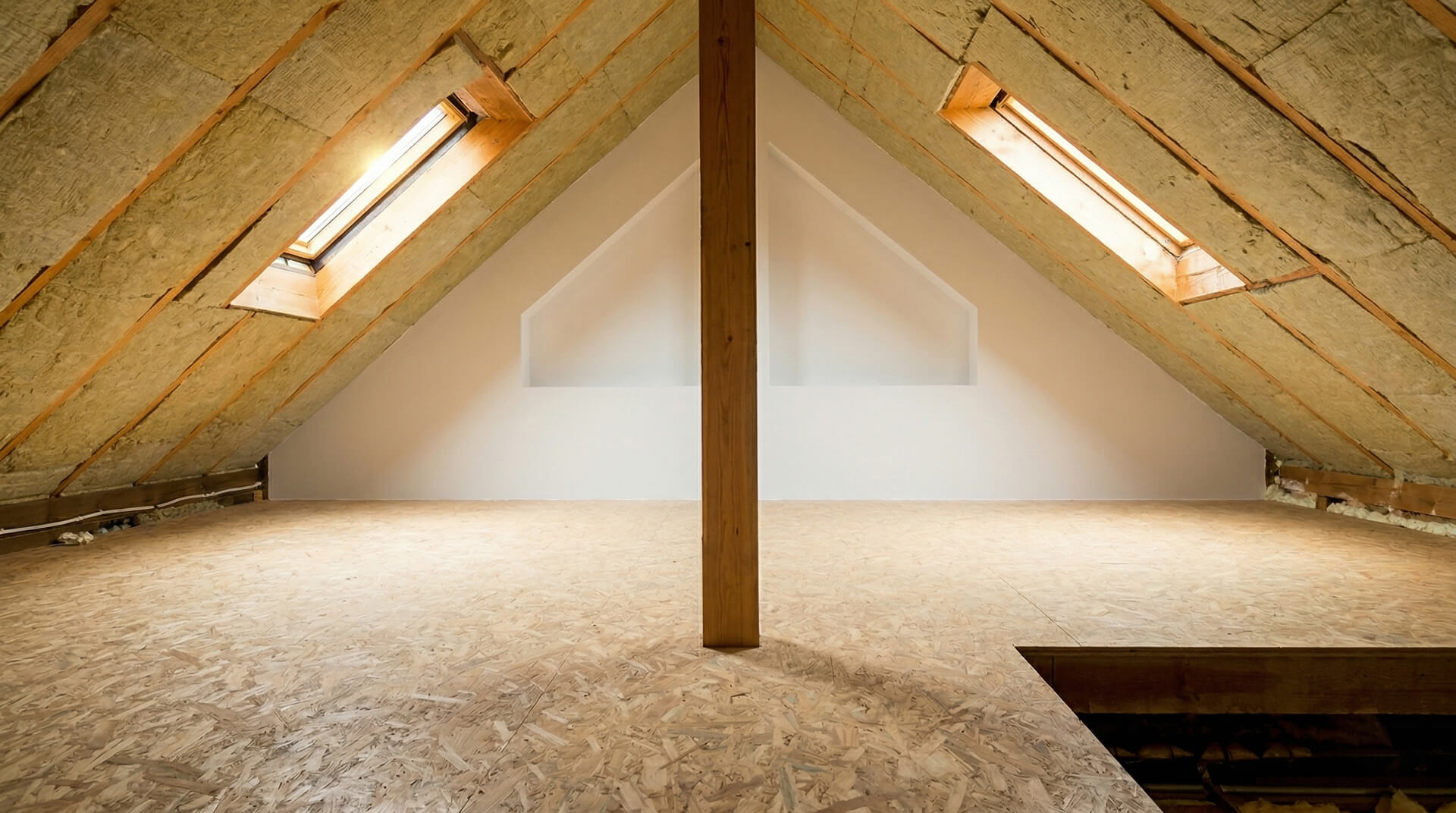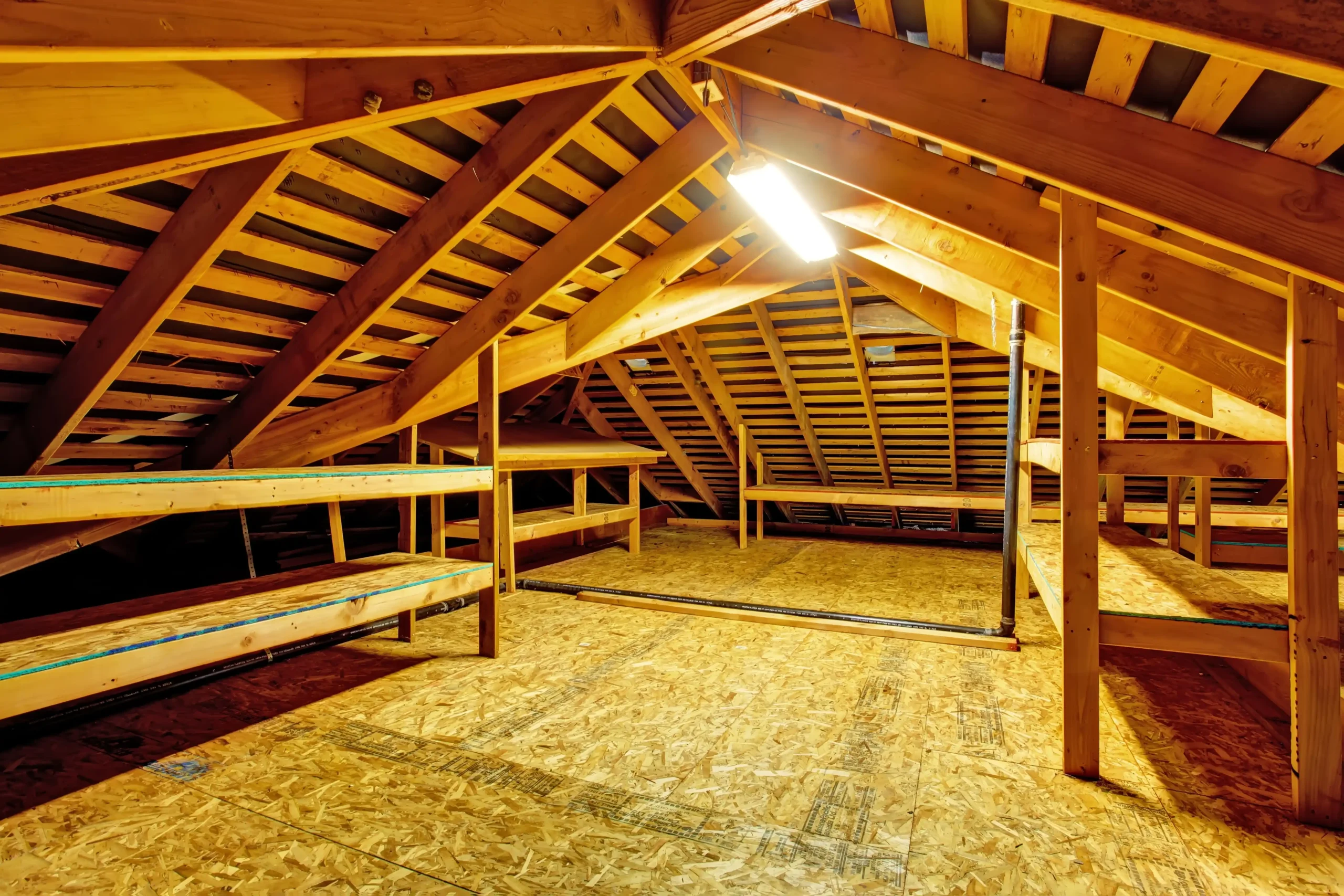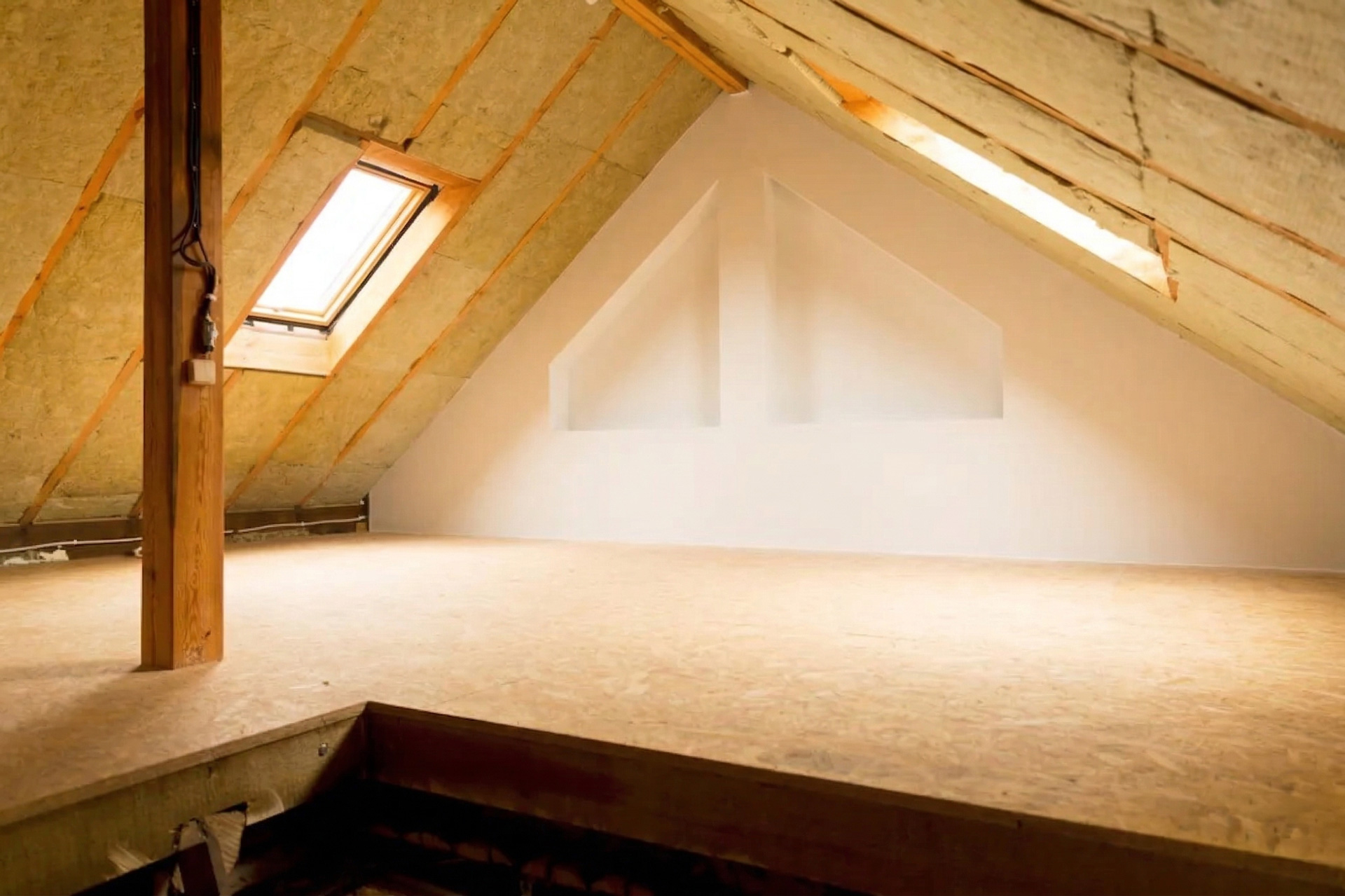
A boarded loft does not have one universal weight limit. In most UK homes, standard ceiling joists are designed for light storage, not heavy loads. Safe capacity depends on joist size, span, board type, and how you spread the weight. If you want to store heavy items, a professional assessment is the safest option.
If you are asking how much weight a boarded loft can hold, the short answer is simple. Most boarded lofts in UK homes suit light, well-distributed storage. They are not usually designed for heavy boxes, furniture, or gym equipment. The loft boards matter, but the ceiling joists underneath are often the real limit.
It also helps to understand the difference between a loft boarded for storage and a loft built as a proper room. If you are unsure what your loft can safely hold, Primeway can help you explore practical storage options and advise when further structural input may be needed through services such as loft services.
How Much Weight Can A Boarded Loft Hold?
There is no single safe number that applies to every loft. A boarded loft may safely hold light household storage, but the true load capacity depends on several factors:
- Joist Size: Larger joists usually carry more weight than smaller ones.
- Joist Span: The longer the unsupported span, the more a joist may flex under load.
- Joist Spacing: Closer joists can give the boards better support.
- Age Of The Property: Older homes may have undersized or irregular joists.
- Boarding System: Boards may be strong enough to stand on, but the structure below may not support heavy storage.
- Load Distribution: Spread-out storage is usually safer than putting weight in one small area.
As a general guide, a non-habitable loft is usually meant for light storage only. If you plan to store dense items or use the loft heavily, seek professional advice rather than relying on guesswork.
Why There Is No Single Weight Limit For Every Loft
Homeowners often want one simple figure, but loft strength is a structural issue, not just a product issue. Two homes with similar boarded lofts can have very different safe load limits.
Ceiling Joists Vs Structural Floor Joists
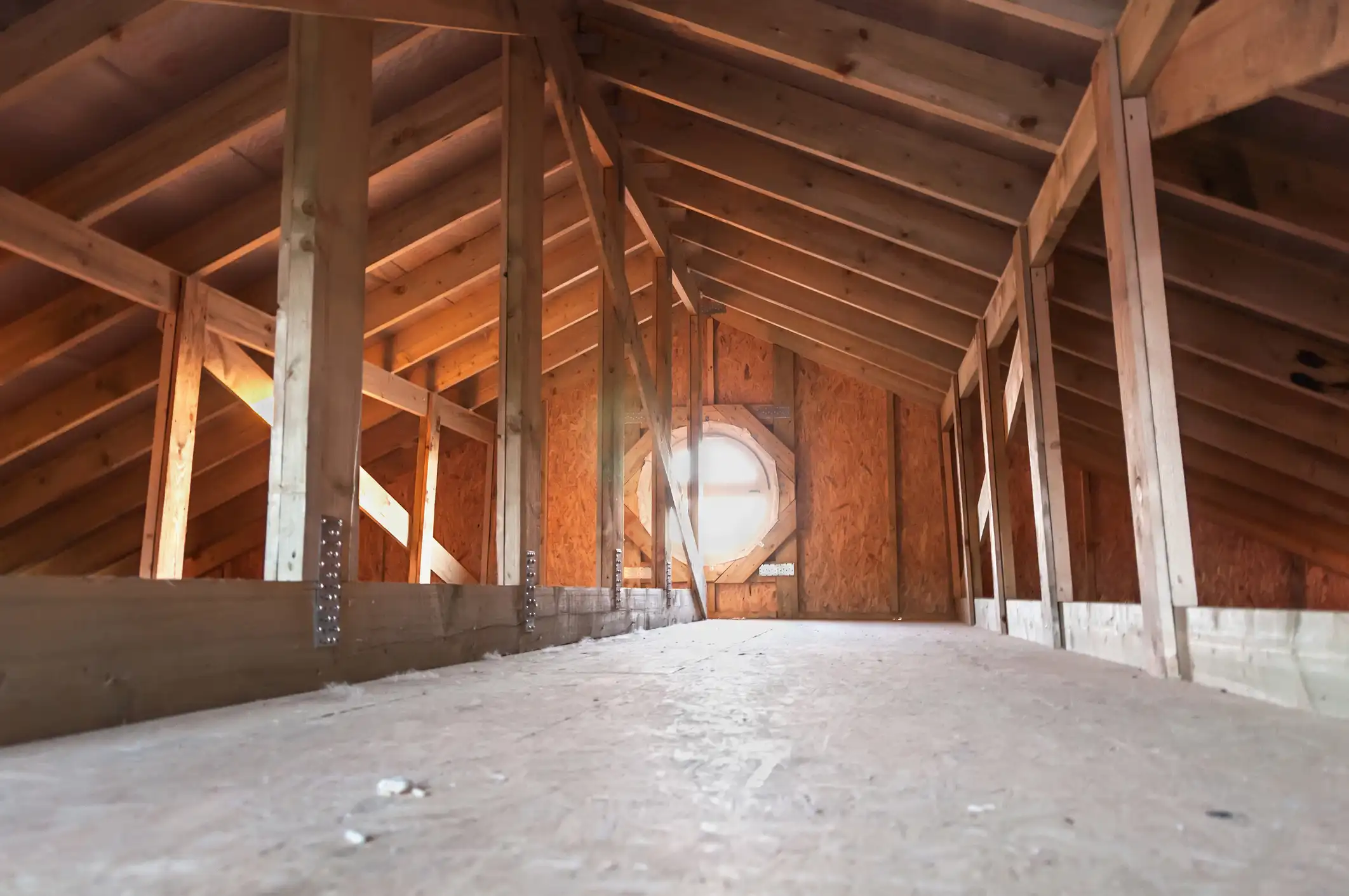
In many homes, loft boarding sits above ceiling joists. These joists mainly support the ceiling below. They are not designed like floor joists in a habitable room. A loft conversion, by contrast, uses structural floor elements built for regular use and heavier loads.
This difference matters. Boarding over ceiling joists creates a useful storage platform, but it does not turn the loft into a habitable floor. The Planning Portal guidance on loft conversions explains the difference between basic loft storage and a loft intended to be used as a room.
How Joist Size, Span And Spacing Affect Load Capacity
Joists work as part of a structural system. Their depth, width, condition, spacing, and unsupported length all affect how much weight they can safely handle. A short, well-supported joist may perform very differently from a long joist carrying the same items.
UK structural principles are covered in Approved Document A: Structure. For homeowners, the key point is simple: you cannot judge exact loft capacity by appearance alone.
Why Spreading Weight Matters As Much As Total Weight
A loft can be overloaded by concentrated weight even when the total amount stored does not seem excessive. For example, several heavy boxes stacked in one corner may create more stress than lighter items spread across a wider area.
Think in terms of pressure, not only total weight. A few dense objects placed close together can overload one part of the loft much faster than larger but lighter items.
What A Boarded Loft Is Normally Designed For
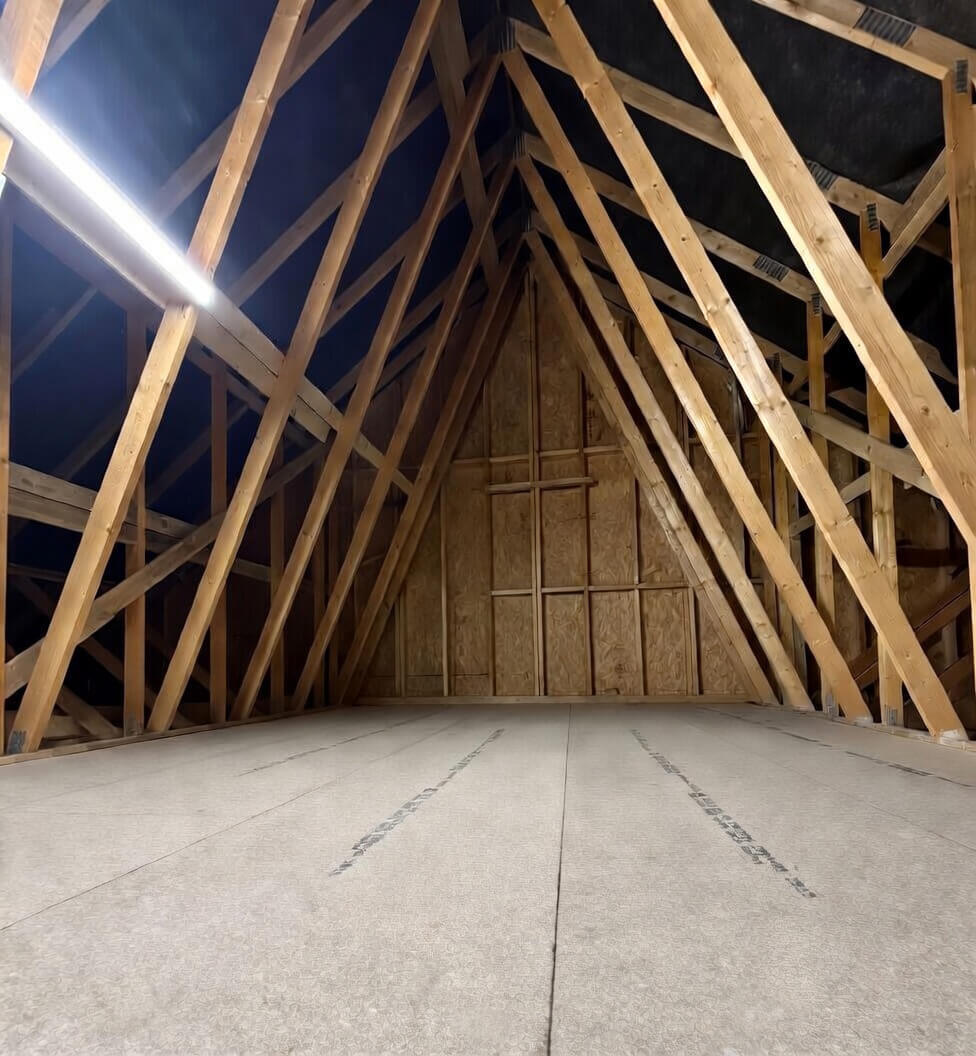
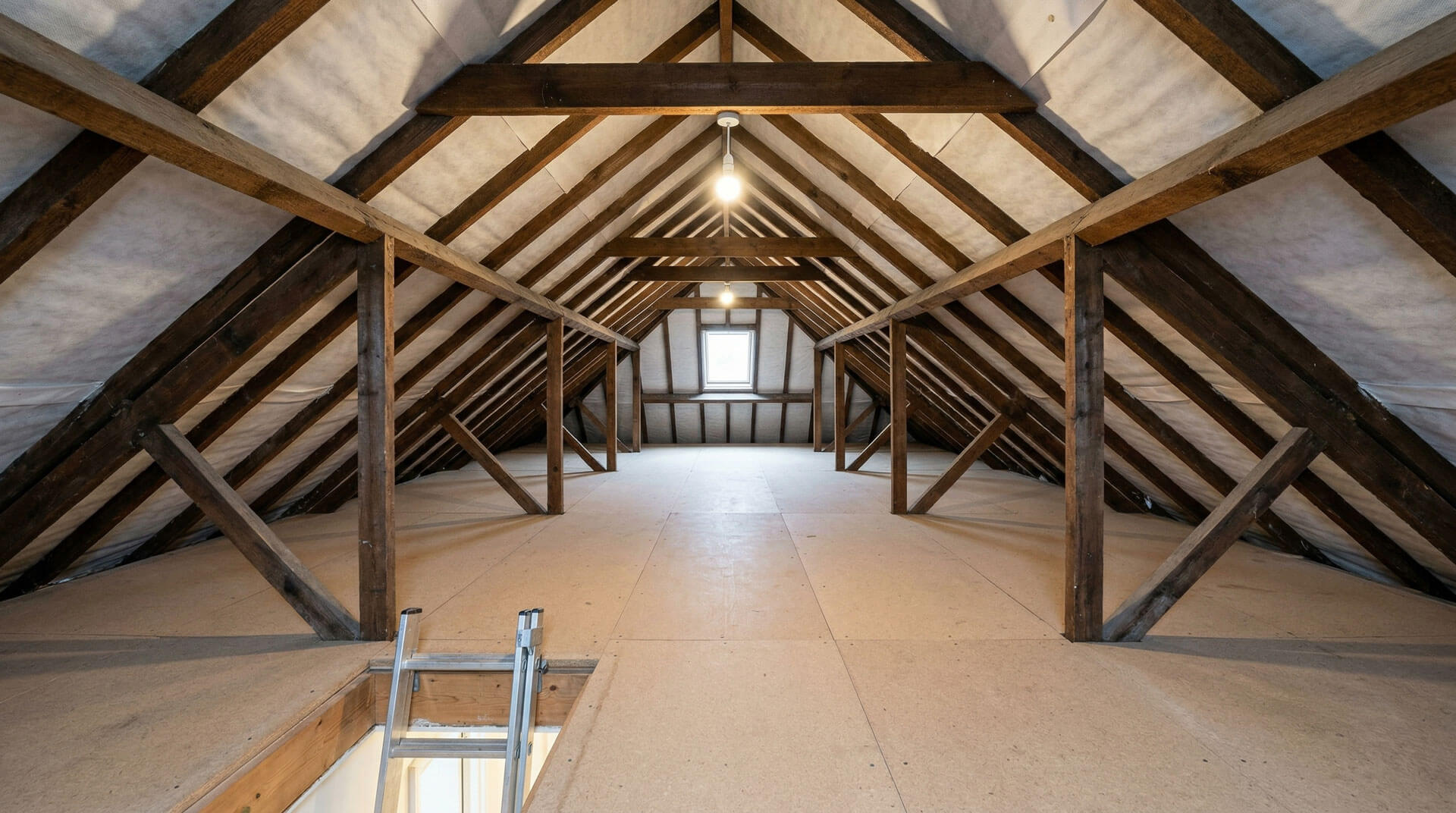
A standard boarded loft usually makes a non-habitable roof space safer and easier to use for occasional storage. It is not normally intended to work like a spare room or a fully usable upper floor.
Light Storage In A Non-Habitable Loft
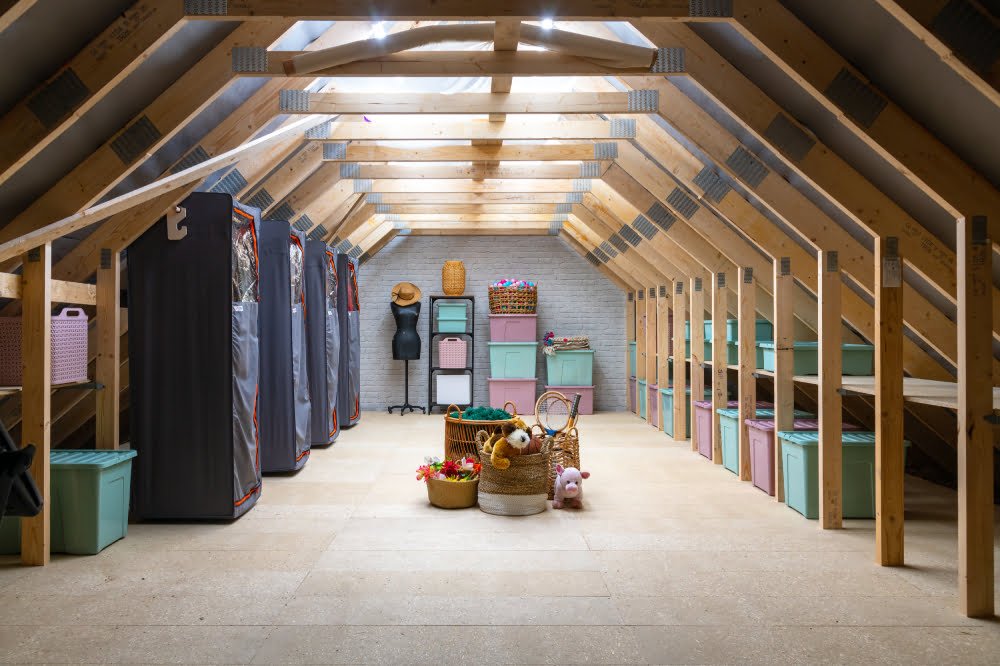
In most cases, loft boarding is best suited to items such as:
- Seasonal Decorations: Christmas trees, ornaments, and wrapping supplies.
- Clothing And Bedding: Spare duvets, coats, and out-of-season clothes.
- Empty Or Light Suitcases: Travel items that do not add much concentrated load.
- Light Household Boxes: Bulky but low-density contents stored in manageable containers.
If your goal is simple loft storage rather than a conversion, purpose-designed systems from loft boarding packages can help create a more practical space while protecting insulation and improving access.
The Difference Between Storage Boarding And A Loft Conversion
A boarded loft for storage is very different from a loft conversion. A storage loft is mainly for occasional access and light loading. A loft conversion is a structural project with upgraded floor strength, insulation, fire safety, and access requirements.
Confusing the two can lead to unsafe assumptions. If you want to use the loft for more than basic storage, you may need major structural work rather than extra boarding.
What Items Are Usually Safe To Store In A Boarded Loft
The safest approach is to choose lightweight, dry, and non-fragile items. You should also spread them evenly.
Lightweight Boxes, Decorations And Suitcases
Items that are usually more suitable include:
- Plastic Storage Boxes: Filled with lighter household items.
- Christmas Decorations: Large in volume but often light in weight.
- Soft Furnishings: Pillows, duvets, and spare curtains.
- Clothes And Shoes: Best packed in moderate-sized containers.
- Suitcases: Especially if empty or lightly packed.
Adding loft shelving can also help you organise lighter items. However, shelving should still match the underlying structure and intended load.
Items To Avoid Storing, Such As Books, Gym Equipment And Furniture
Some items are risky because they are much heavier than they look. Be careful with:
- Books And Paper Files: These are extremely dense and can create heavy point loads.
- Gym Equipment: Weights and machines are rarely suitable for a standard storage loft.
- Furniture: Wardrobes, drawers, and solid wood pieces can be too heavy and awkward.
- White Goods Or Appliances: These can overload joists and are hard to move safely.
- Large Collections: Vinyl records, tools, tiles, and paint cans can add up quickly.
If you are unsure whether shelves or boards can support certain box types, this guide on whether loft shelving is strong enough for storage boxes may help you plan more safely.
Signs Your Loft May Not Be Suitable For Heavier Storage
Sometimes the loft gives warning signs that it is already under strain. Do not ignore them.
Sagging Ceilings, Cracked Plaster And Flexing Boards
Warning signs can include:
- Sagging Ceilings Below: This may show that joists are under stress.
- Cracks In Plaster: Especially if they appear or worsen after you add storage.
- Springy Or Bouncy Boards: Excess movement underfoot suggests poor support.
- Creaking Or Deflection: Noises and visible bending should be taken seriously.
Ceiling systems are not the same as structural floors. That is why excessive loft loading can affect the rooms below. Technical references such as the British Gypsum White Book help show why a ceiling should not be treated like a floor.
Older Properties And Undersized Joists
Older homes can be less predictable. Timber may have aged, earlier alterations may not be obvious, and joists may be smaller than expected. If your property is older, or if the loft structure looks irregular, take extra care.
For wider guidance on surveys and building condition, the Royal Institution of Chartered Surveyors is a useful source of information.
Speak to a loft specialist
Rather just talk it through?
Speak to the Primeway team about your loft and get honest, no-pressure advice on the right approach for your home.
Call 0800 145 5226Does Raised Loft Boarding Over Insulation Affect Strength?
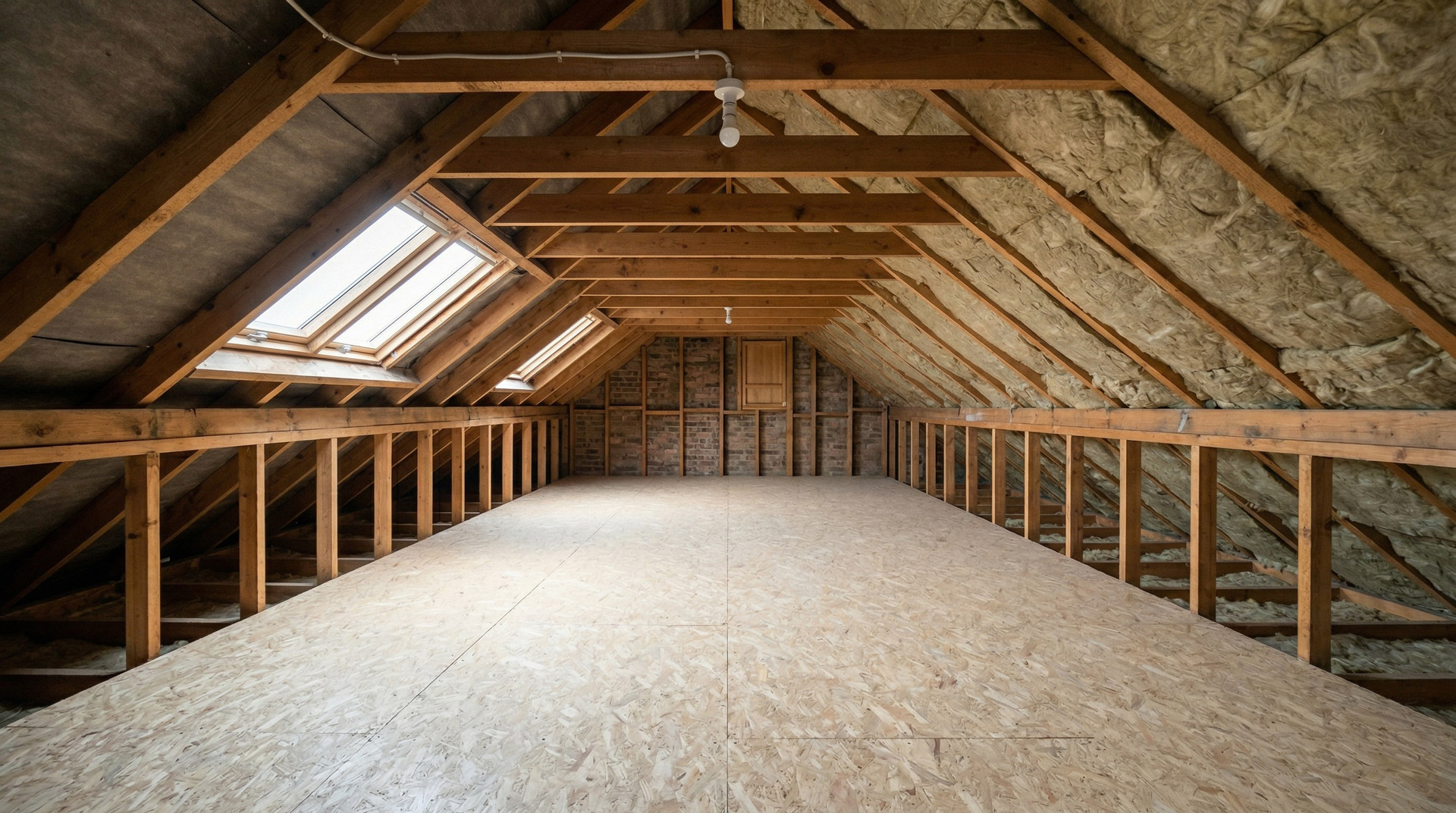
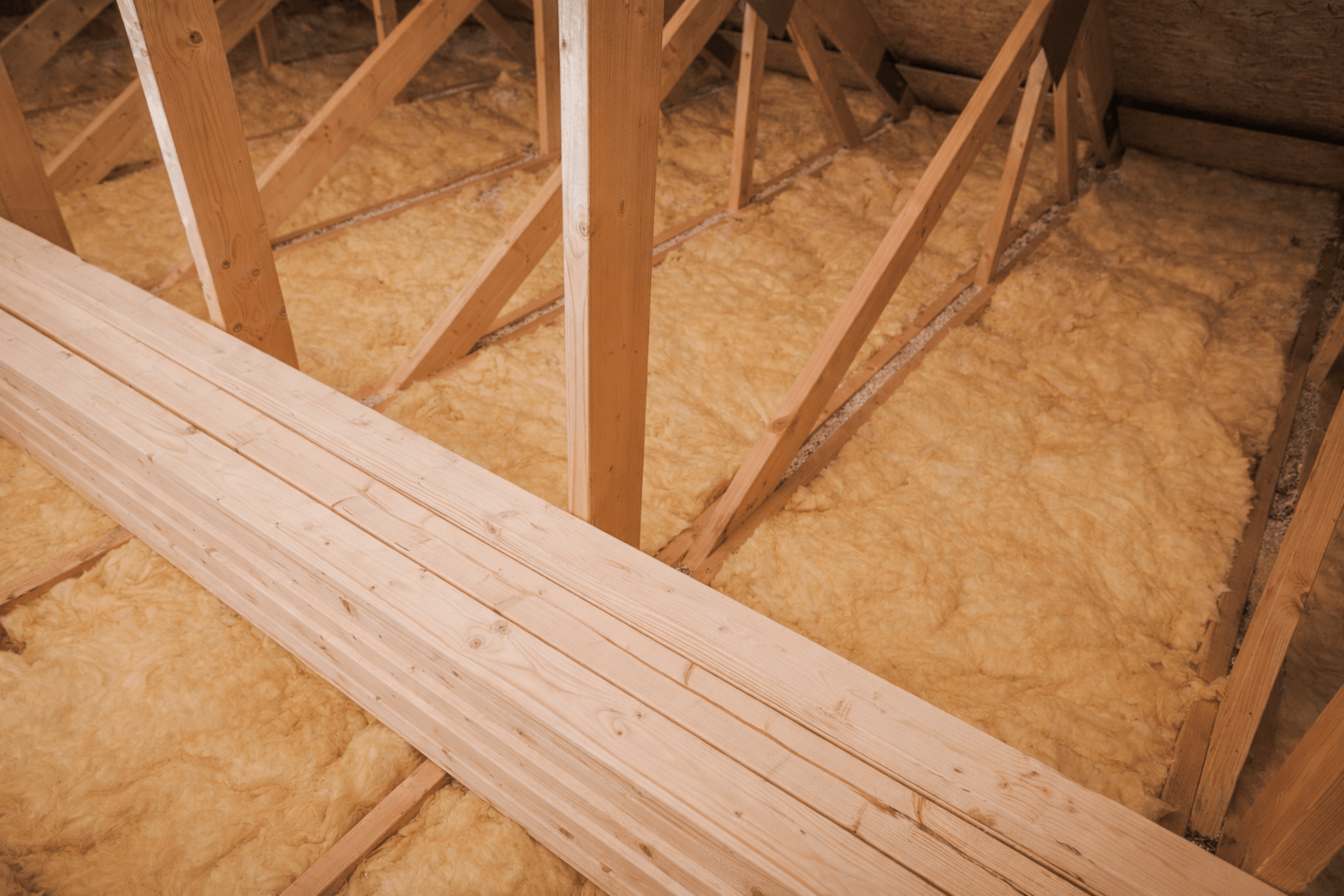
Raised loft boarding is popular because it lets insulation stay at the correct depth while still creating a usable storage platform. However, it is important to understand what it changes, and what it does not.
Why Raised Systems Protect Insulation
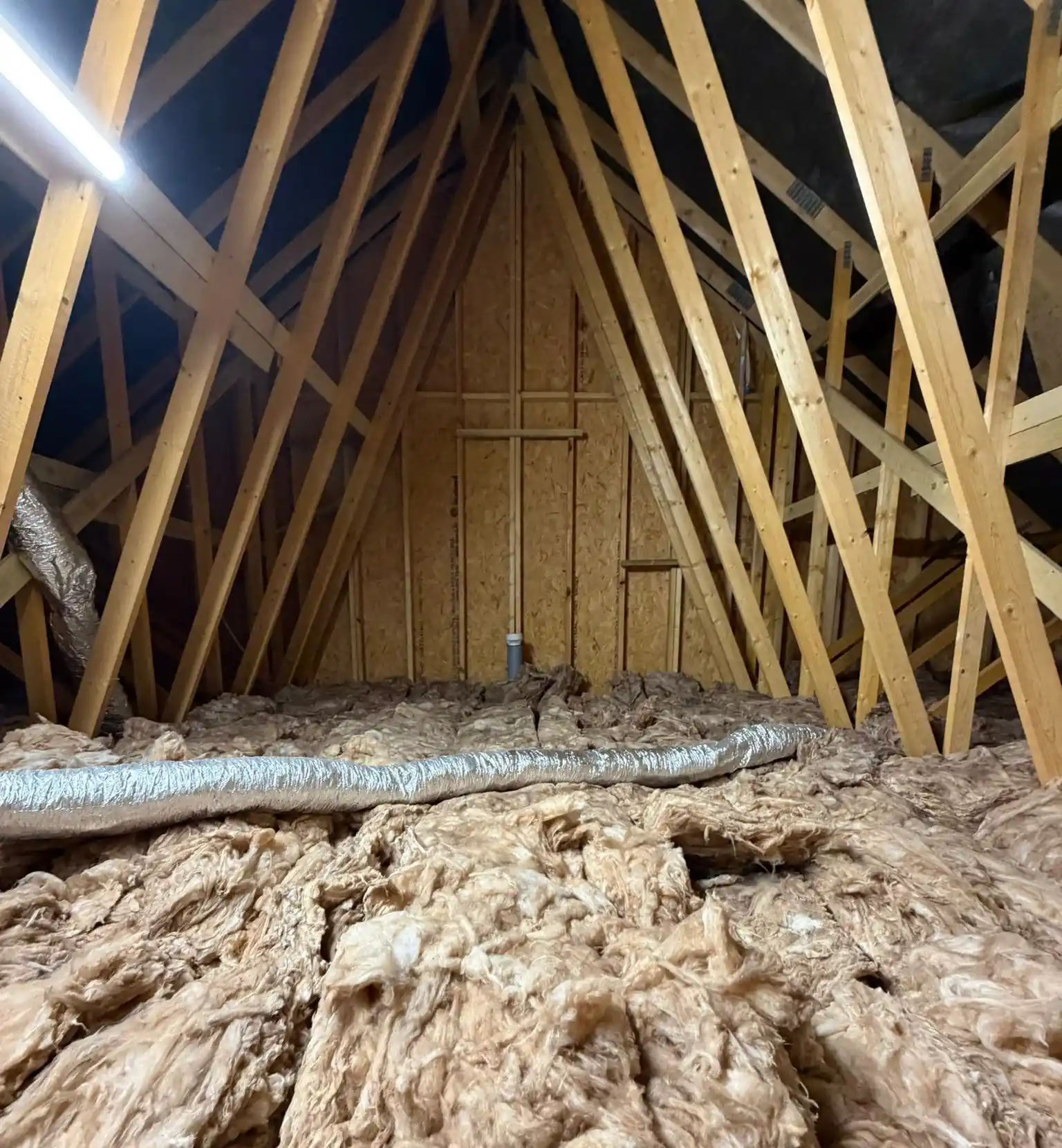
When boards are laid directly on top of insulation, the insulation can be compressed. This reduces thermal performance. Raised systems lift the boards above the insulation layer so the material can keep working properly.
If you want to understand this setup better, see can loft boarding be installed over insulation and can loft insulation be installed with loft boarding. You can also explore insulation solutions for a more energy-efficient loft.
Why Raised Boarding Does Not Automatically Increase Structural Load Capacity
This point is often misunderstood. A raised boarding system can improve usability and insulation performance, but it does not automatically mean the loft can hold more weight. In most cases, the underlying joists still determine the safe structural load.
In simple terms, a better boarding system is not the same as a structurally upgraded floor.
When To Get Professional Advice
If your storage plans go beyond light household items, expert advice is the safest route.
When An Installer Can Advise
A professional loft boarding installer can often advise on practical issues such as:
- Suitable Boarding Areas: Where storage can be placed most effectively.
- Raised Systems Over Insulation: How to protect thermal performance.
- Access Improvements: Better use of loft ladders and loft lighting.
- Shelving Layouts: Smarter use of the available loft space.
You can also see how these features work together in combined loft boarding, ladders and lighting.
When You May Need A Structural Engineer
You may need a structural engineer if:
- You Want To Store Heavy Items: Such as books, tools, equipment, or dense archives.
- The Loft Shows Warning Signs: Including sagging, cracking, or excessive movement.
- The Property Is Older Or Unusual: Especially if structural details are unclear.
- You Are Planning A Change Of Use: From simple storage to something closer to habitable use.
A structural engineer can assess joist dimensions, span, spacing, and condition. They can then give advice based on the actual building, not assumptions.
How To Use A Boarded Loft Safely For Storage
Even when a loft is suitable for light storage, careful use makes a big difference.
Distribute Loads Evenly
- Spread Boxes Out: Avoid stacking all the heaviest items in one bay.
- Use Smaller Containers: They are easier to lift and less likely to create concentrated loads.
- Keep Dense Items To A Minimum: Books, files, and tools should be stored with care.
- Avoid Overstacking: Height can make loads unstable and harder to manage safely.
Keep A Safe Walkway And Access Route
- Leave Clear Paths: So you can move safely without stepping onto unsupported areas.
- Do Not Block The Hatch: Access points should stay easy to use in an emergency.
- Watch Head Height: Loft spaces can be awkward and prone to accidents.
- Check Lighting: Good visibility reduces trip risks and poor item placement.
Combine Boarding With Lighting, Ladders And Shelving
A practical loft is not only about boards. Safe access and good organisation matter as well. Combining boarding with shelving, a stable ladder, and proper lighting can make occasional storage much easier and safer.
If you want tailored advice, Primeway can help you plan a setup that suits your home, whether that means storage platforms, shelving, lighting, or access improvements. You can start by exploring options through contacting Primeway.
FAQs About Boarded Loft Weight Limits
Can You Store Boxes Of Books In A Boarded Loft?
Possibly, but you should be careful. Books are far denser than many people realise. A few small boxes can become very heavy very quickly. In a standard loft boarded over ceiling joists, large quantities of books are often a poor choice unless a professional has confirmed that the loft can take the load.
Is Loft Boarding Strong Enough To Walk On?
In many cases, yes. Loft boarding creates a safer walking and storage surface than exposed joists alone. However, being safe to walk on occasionally is not the same as being suitable for heavy storage. The surface may feel solid while the structure underneath still has limited capacity.
Can Loft Boarding Be Installed Over Insulation?
Yes, it often can. Raised systems are commonly used for this purpose. The main benefit is that the insulation is not compressed, which helps it perform properly. Just remember that boarding over insulation improves usability, not necessarily structural strength.
Fun Fact: Books Can Outweigh Decorations Fast
A cubic metre of books can weigh hundreds of kilograms. That is why a few small book boxes may put more strain on a loft than several large boxes of Christmas decorations.
Conclusion
So, how much weight can a boarded loft hold? There is no one-size-fits-all answer. Most boarded lofts in UK homes are designed for light, evenly distributed storage, not heavy loads. The real limit usually depends more on the joists beneath the boards than on the boards themselves.
If you want to make your loft safer, more usable, and better organised, Primeway can help with boarding, insulation, shelving, ladders, and lighting. For straightforward advice on the right setup for your home, explore services from Primeway or get in touch through the contact page.
Thinking about your loft?
Book a free loft survey and we will talk you through the options that suit your home and budget.