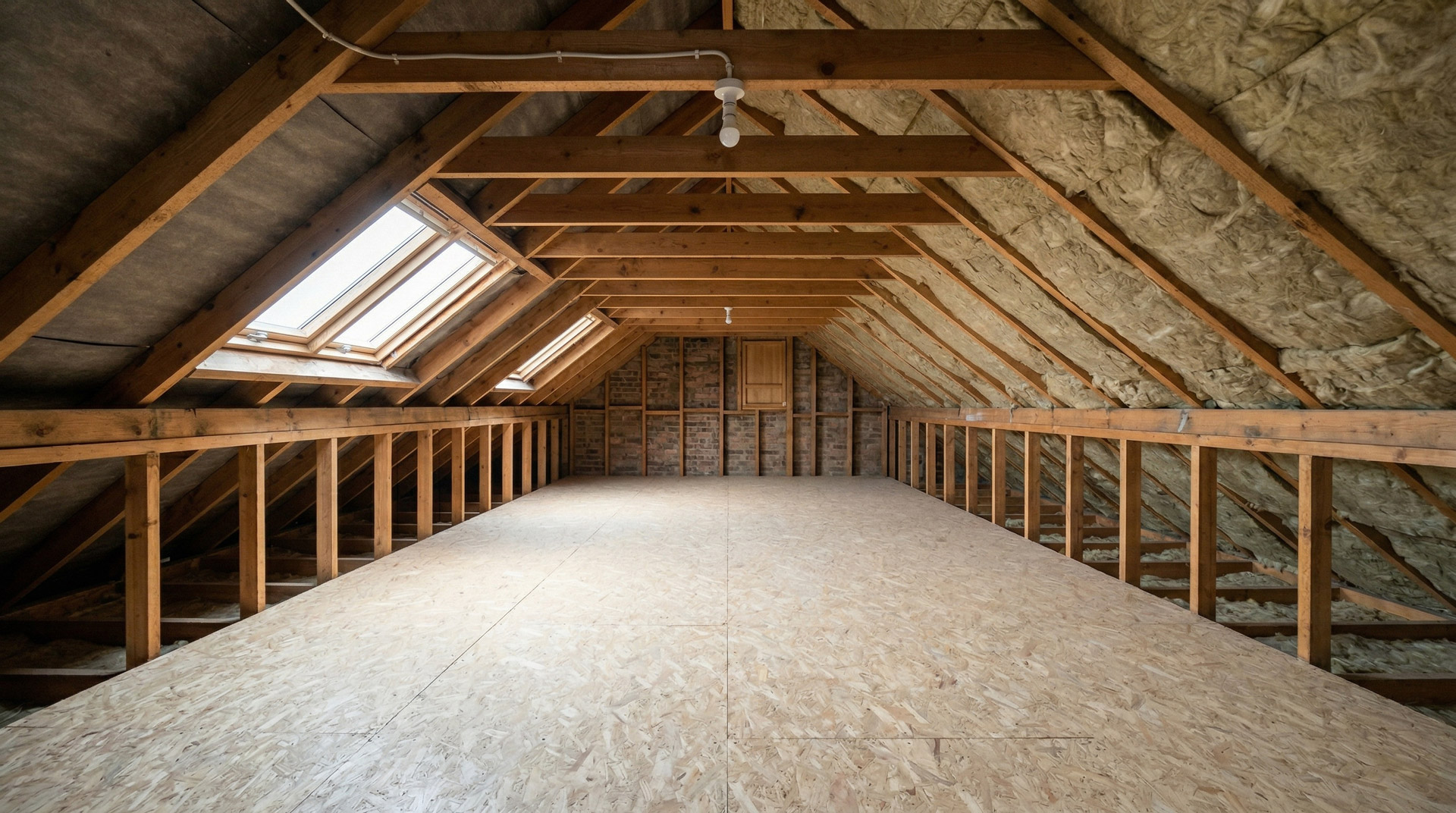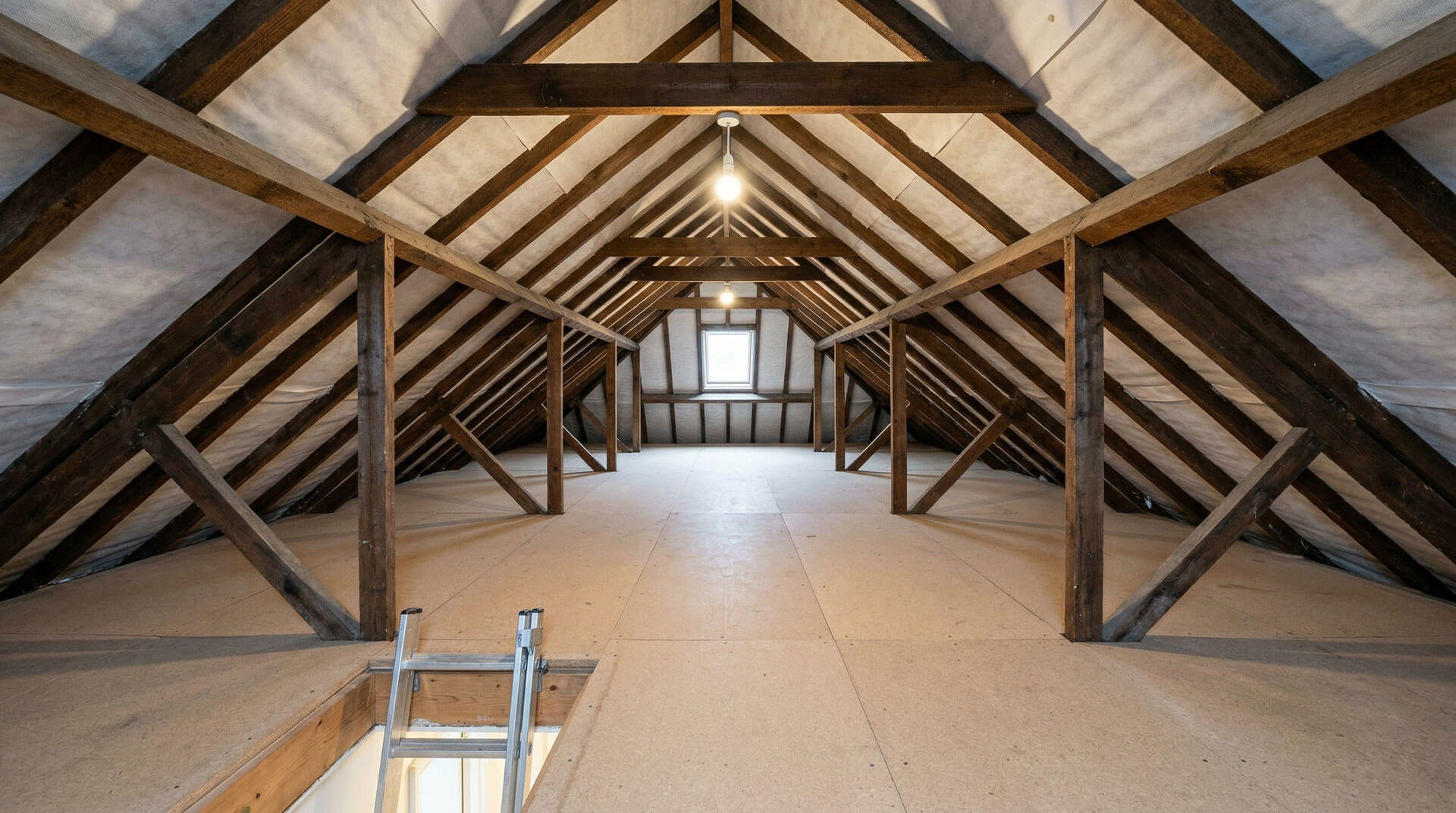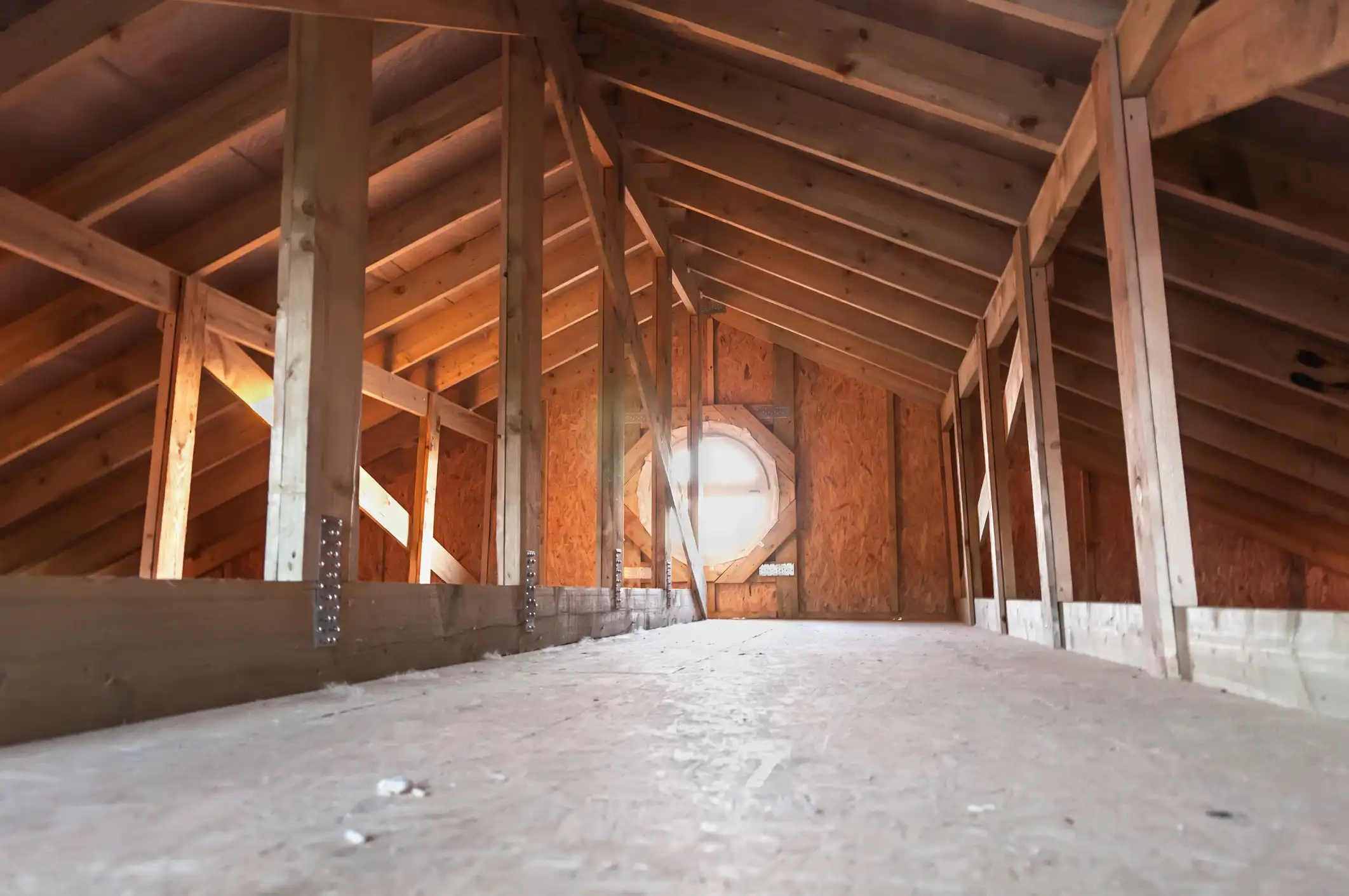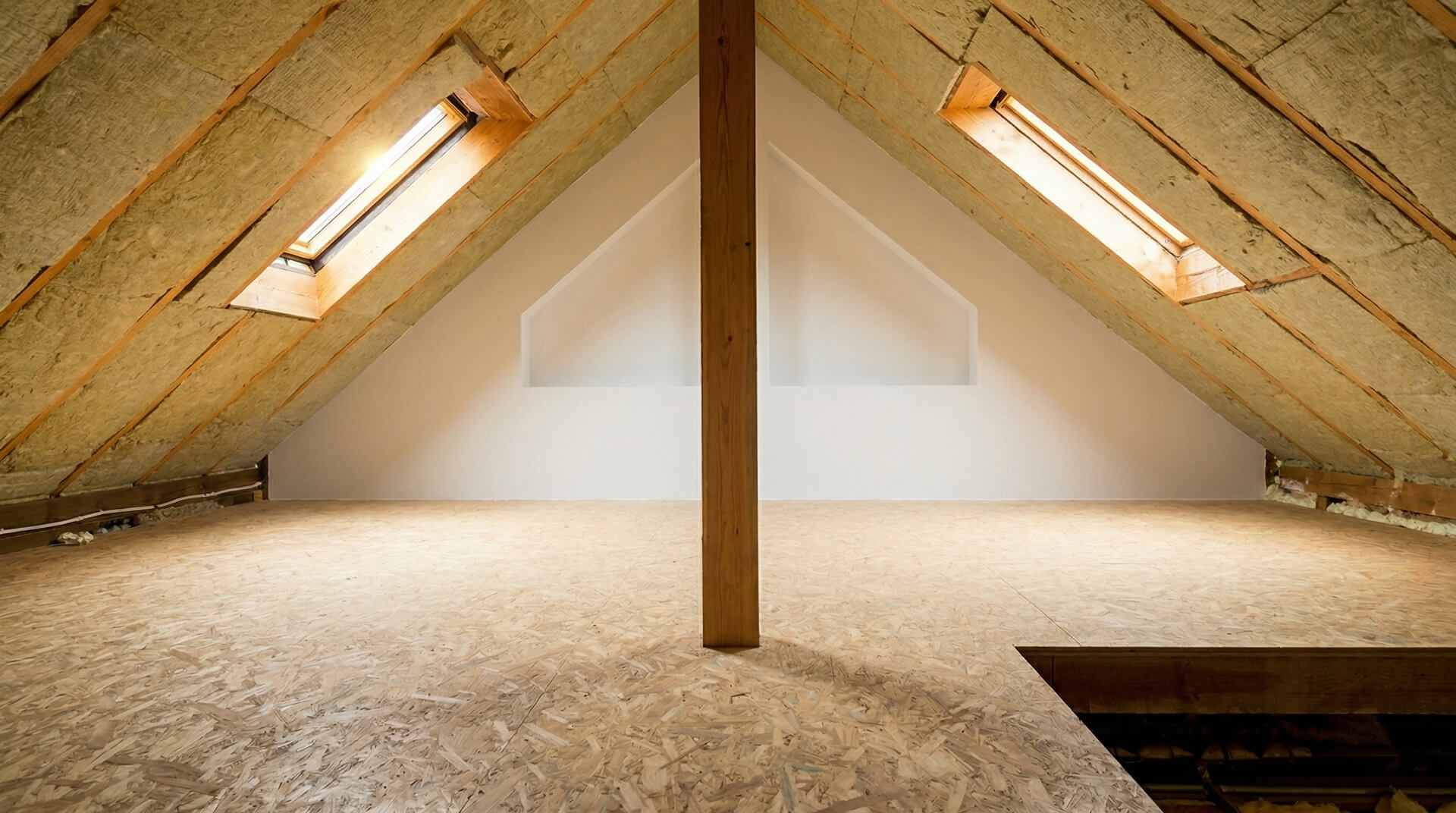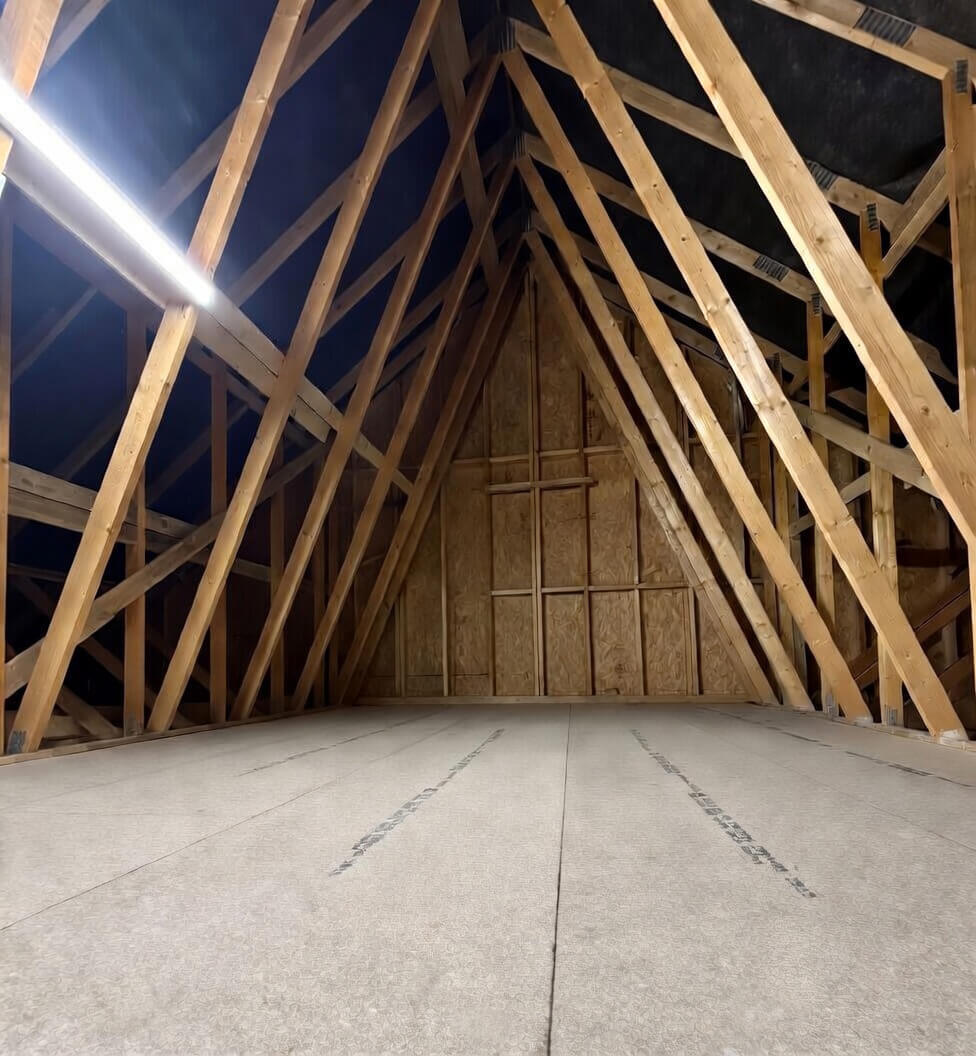
You can usually tell if a loft is boarded by looking for solid flooring panels fixed across the ceiling joists. These create a stable surface for walking or light storage. A properly boarded loft should feel secure underfoot, allow access beyond the hatch, and ideally sit raised above the insulation rather than pressing it down.
If you open your loft hatch and feel unsure, you are not alone. Many lofts have a few loose panels, a short walkway or exposed joists, which can make the space look boarded when it is not. The simplest check is to look for a fixed, stable floor surface designed for access or storage, rather than a few boards placed for balance.
In this guide, Primeway explains how to identify a boarded loft, what signs suggest a professional installation, and when it is safest to ask for an expert inspection.
How To Tell If A Loft Is Boarded
The quickest way to tell is to look for a continuous floor-like surface above the joists. A boarded loft usually has fitted panels that create a practical area for walking or storing items.
- Check For Fixed Panels: Boards should be secured in place, not simply resting loosely on joists.
- Look For A Stable Surface: A boarded loft should provide a firm area to stand on near the hatch and further into the loft.
- Assess The Layout: Some lofts are fully boarded, while others only have a central path or small storage section.
- Notice The Insulation Height: If boards sit directly on thick insulation, the installation may not be ideal.
Look For Solid Flooring Fixed Across The Joists
A properly boarded loft usually includes chipboard loft panels, plywood or similar flooring panels fixed across the joists. These boards create a flat platform and are normally screwed down in a neat, repeating pattern.
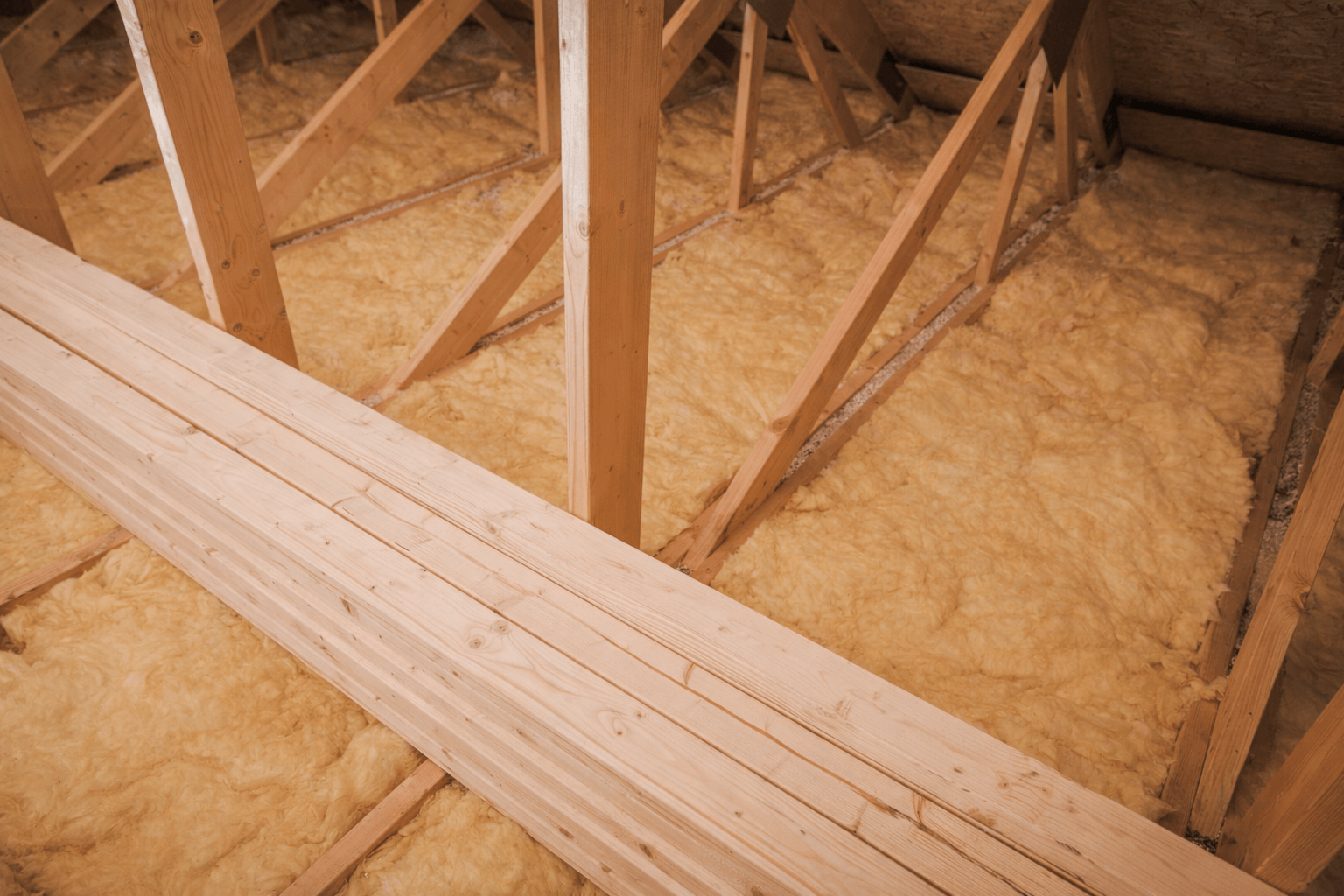
If you only see bare timber joists with insulation between them, the loft is unboarded. If there are one or two sheets laid down without fixings, this is more likely a temporary crawl board than a truly boarded loft.
Check Whether You Can Safely Stand Or Store Items In The Loft
A boarded loft is meant to provide usable access. It may not be suitable for heavy storage, but it should offer a stable place to stand when entering the loft. If the surface flexes badly, rocks, or feels insecure, it may be old, loose or only partly supported.
As a general rule, do not test this by stepping onto unknown areas. Household fall prevention matters, especially when access is awkward, as highlighted by the NHS guidance on preventing falls at home.
See If The Boards Cover The Whole Loft Or Only Part Of It
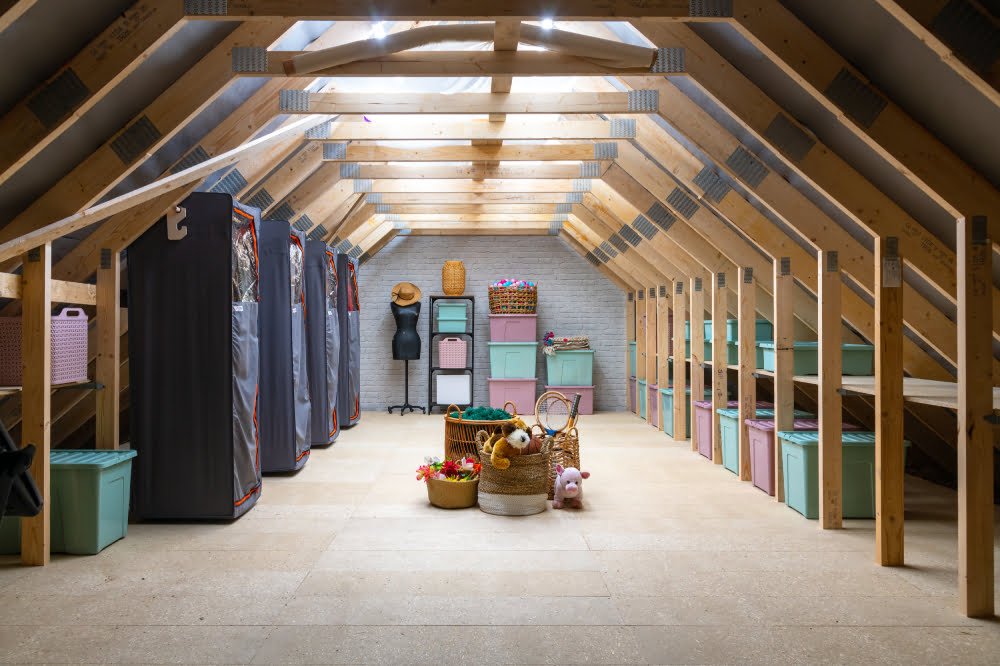
Not every boarded loft is fully boarded. Some have enough flooring for light storage around the hatch, while others cover most of the central loft space.
- Partially Boarded Loft: Usually includes a walkway, platform or small storage zone.
- Fully Boarded Loft: Usually covers most of the usable area between structural features.
This matters because a few fitted boards do not automatically mean the whole loft is suitable for storage.
What A Boarded Loft Looks Like
A boarded loft usually looks tidy, deliberate and easy to move around in. The panels are often evenly spaced, securely fixed, and arranged to make the best use of the available space.
Common Materials Used For Loft Boarding
The most common material is tongue-and-groove chipboard made for loft use. You may also see plywood in older installations. Boards used for proper loft storage usually look uniform in size and thickness. For its professional installations, Primeway uses P5 moisture-resistant tongue-and-groove chipboard, which is graded to cope with moisture and everyday storage use.
- Chipboard Panels: Common in modern loft boarding installations.
- Plywood Sheets: Sometimes found in older or custom-fitted loft spaces.
- Raised Boarding Systems: Designed to lift the floor above insulation.
Signs Of Professional Loft Boarding
Professional loft boarding often has a cleaner finish and better access planning. Common signs include:
- Neat Panel Alignment: Boards are fitted evenly rather than placed at random.
- Secure Fixings: Panels are screwed down properly.
- Access Around The Hatch: Entry and exit feel safer and more practical.
- Raised Construction: Boards sit above insulation to help preserve thermal performance.
- Integrated Features: Loft ladders, lighting or shelving have been planned as part of the setup.
If you are planning improvements, Primeway offers loft boarding packages, as well as support with loft ladders, loft hatches and loft lighting.
Boarded Loft Vs Unboarded Loft
The difference is usually clear once you know what to look for. A boarded loft has a fixed floor surface. An unboarded loft does not.
Visible Signs Of An Unboarded Loft
- Exposed Joists: You can see the timber structure with gaps between the joists.
- Insulation Between Joists: Mineral wool or similar material is visible and uncovered.
- No Fixed Floor Surface: There is no continuous deck for storage or walking.
- Loose Planks Only: Temporary boards may be present, but they are not permanently installed.
Why Exposed Joists Are Not The Same As Boarding
Joists are structural timbers, not a floor. Stepping on the wrong spot between them can damage the ceiling below and create a serious fall risk. Guidance on lofts and roof structures from British Gypsum helps explain how loft structures relate to the ceiling beneath.
If your loft only has visible joists and insulation, treat it as unboarded until a proper inspection confirms otherwise.
How To Inspect Your Loft Safely
Before checking whether your loft is boarded, put safety first. Poor access, low lighting and uncertain footing are the main risks.
Use Lighting And Safe Access Before Checking
Use a stable loft ladder if one is fitted. If there is no fixed ladder, avoid overreaching from a stepladder. Good visibility also matters, so use a torch or installed loft light before looking further into the space.
- Check The Hatch Area First: This is usually where any boarding starts.
- Use Proper Lighting: Shadows can hide gaps, cables or uneven boards.
- Avoid Solo Checks If Unsure: Having someone nearby adds safety.
If access is poor, Primeway can help with safer upgrades through its loft services.
Avoid Stepping Between Joists Or Onto Insulation
Never assume insulation can hold your weight. It cannot. Plasterboard ceilings below are also not designed to support someone who misses the joist line. If you cannot clearly see a fixed boarded area, do not step forward.
This is especially important in older properties, where lighting may be limited and boards may have shifted over time.
Speak to a loft specialist
Rather just talk it through?
Speak to the Primeway team about your loft and get honest, no-pressure advice on the right approach for your home.
Call 0800 145 5226Is The Loft Properly Boarded Or Just Partially Covered
Many homeowners ask this after seeing a few panels near the hatch. In practice, there is a big difference between a loft that is partly covered and one that is properly boarded for long-term use.
Partial Boarding For Light Storage
A partially boarded loft usually has a small deck, hatch platform or narrow walkway. This can be useful for light storage, but it does not mean the rest of the loft is accessible. It may simply provide a route to a water tank, wiring point or central storage spot.
If the boarded area is limited, avoid spreading boxes onto unboarded sections. For more practical storage planning, Primeway also provides shelving solutions.
Raised Boarding Above Insulation
One of the clearest signs of a better installation is raised loft boarding. This means the boards sit on supports that keep them clear of the insulation, so the appropriate insulation depth is maintained rather than squashed flat. According to GOV.UK energy efficiency guidance and the National Insulation Association, insulation works best when it stays full and continuous.
If boards are laid at joist level, directly onto thick insulation, the loft may still look boarded, but compressing the insulation reduces its thermal performance.
Problems To Watch For In Older Loft Boarding
Older loft boarding can still be usable, but it is worth checking for warning signs before you rely on it for storage.
Compressed Insulation And Reduced Energy Efficiency
Compressed loft insulation loses some of its effectiveness because trapped air helps it perform properly. If you can see boards pressing directly into the insulation layer, the loft may benefit from an upgraded raised system. You can also learn more through Primeway's insulation services.
Loose, Damp Or Damaged Boards
- Loose Boards: These can shift underfoot and make access unsafe.
- Damp Staining: This may suggest condensation or a roof leak.
- Swollen Chipboard: Moisture can cause board edges to expand and weaken.
- Cracks Or Sagging: These can indicate age, poor support or overloading.
If you notice any of these issues, avoid loading the loft further until someone has checked it.
When To Get A Loft Boarding Specialist To Inspect It
You should contact a loft boarding specialist if:
- You Cannot Tell What Is Safe To Walk On: Unclear layouts should be assessed professionally.
- The Loft Has Only Partial Boarding: You may need advice on extending usable storage space.
- Insulation Looks Compressed: Raised boarding may be the better option.
- Boards Feel Loose Or Damaged: Safety comes first.
- You Want To Add Ladders, Lighting Or Storage: These features work best as part of a planned installation.
Primeway can assess whether your loft is already boarded, partly boarded or in need of a safer, more efficient upgrade. If you want tailored advice, visit why choose Primeway or contact the team for a professional assessment.
FAQs About Boarded Lofts
Can You Walk On Loft Boards?
Yes, if the boards are properly fixed and supported. However, not all loft boarding is designed for heavy loads, so avoid overloading the space without checking its condition.
Does A Few Boards Near The Hatch Mean The Loft Is Boarded?
No. A few boards may only form a small access platform or walkway. A truly boarded loft has a clear floor area installed for access or storage.
How Can I Tell If The Loft Boards Are Raised Above Insulation?
Look at the edge of the boarded area, if it is visible. If there is a gap or support framework beneath the panels and the insulation remains at full depth below, it is likely a raised system.
Is It Safe To Inspect My Loft Without A Ladder?
Not usually. Safe loft access is important, especially if you need both hands free for balance and lighting. If access is awkward, it is better to arrange a professional inspection.
Can Loft Boarding Affect Insulation Performance?
Yes. If boards compress the insulation, thermal performance can fall. Raised boarding helps protect the insulation layer while still creating storage space.
Fun Fact: A Walkway Is Not Always A Fully Boarded Loft
A loft can look boarded at first glance, but even a few fitted panels may only create a walkway rather than a true storage deck across the usable space.
If you are still unsure whether your loft is properly boarded, the safest next step is a professional check. A quick inspection can confirm whether you have a stable storage surface, a partial setup or an older installation that needs attention. Primeway can help you make the most of your loft with practical advice, safe access solutions and professionally installed boarding designed around your home.
Thinking about your loft?
Book a free loft survey and we will talk you through the options that suit your home and budget.